
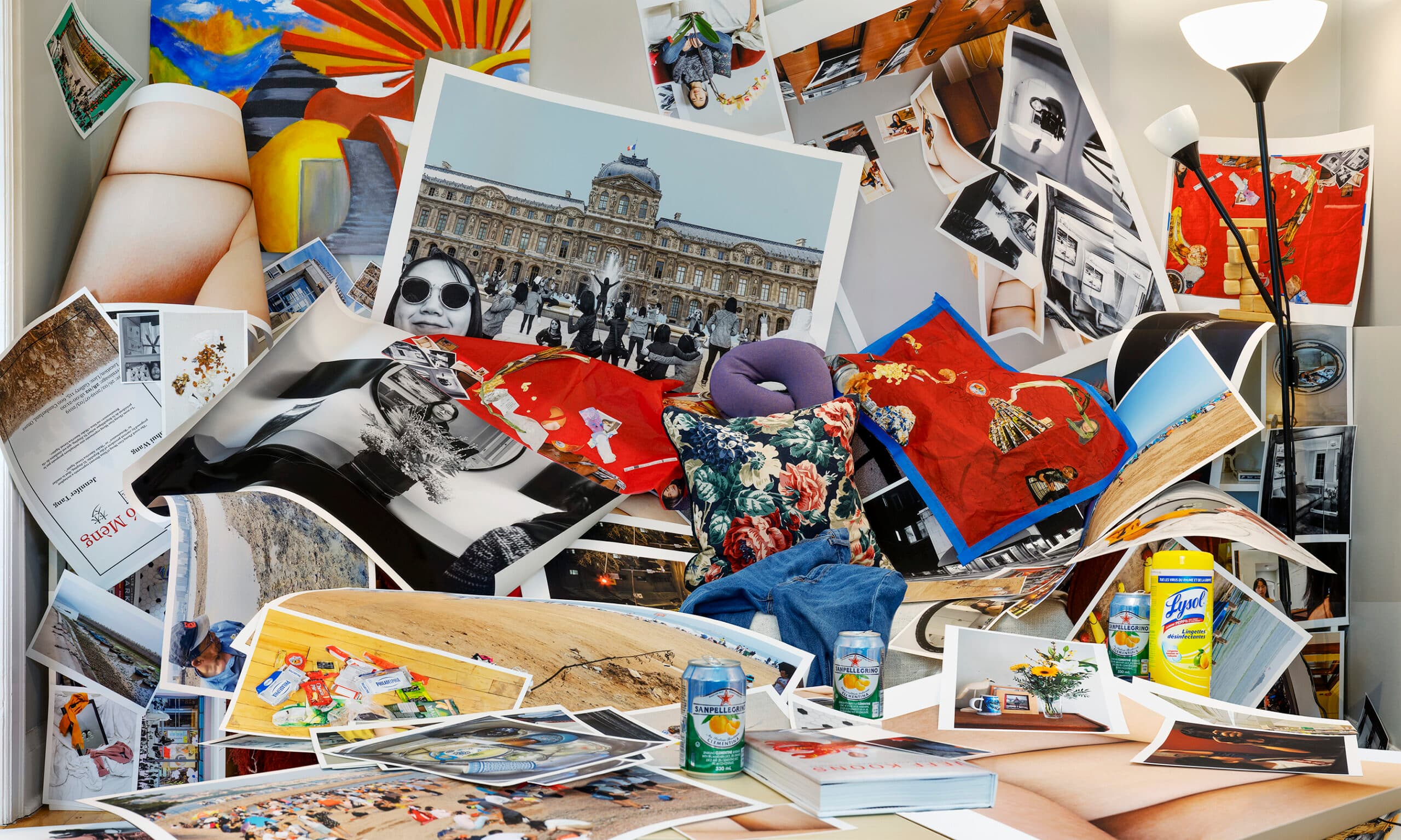
There it was, London Design Biennale (LDB) 2021.
Since spring 2020, the pandemic has forced the art world to shut its doors to everyone, a large part of that world anyway, if you look away from all the mediocre online exhibitions and the chaotic sphere of NFTs. But then there it was, LDB at Somerset House in the summer of 2021. It was probably one of the first major art events to welcome back visitors amidst everything that was going on.
It must be something worth documenting, I thought. Not to mention the fact that it’s taking place in the city of London, the city that practically raised me and opened my eyes to the art and creative world. Given the fact it was still an uncertain and volatile period for travelling, I needed to find myself a London-based photographer who could also write to document the whole event, where else to look than the famous Royal College of Art (RCA)? And it was just in time for graduation too, there should be a couple of them who had their sleeves rolled up, geared up and ready to venture out to the real world, I imagined.
As I browsed through the list of works from the year’s MA Photography graduates, to say that I was blown away would be an understatement. They were miles better than many of the works I had seen at some of the Japanese art fairs. I was excited, a bit like when you play Football Manager and witness a pool of promising teenage talents with all the right attributes rising through the academy, doing magical things on the pitch and performing way above their ages — it was a bit like that when I saw these works created by the RCA graduates, I didn’t realise students were capable of so much these days.
One of them that grabbed me in particular, was a series of Kubrick-esque images created by someone named Jinhui Wang (汪锦卉), comprises outer space elements in vivid colours, as well as mundane settings and objects from our daily lives, digitally infused to create this whole vibe of a 70s science fiction film, even though the crisp and contrasty images are undeniably modern, almost like something you would see on Netflix — an imaginary universe, an alternative timeline — you get the drill.
The work in question here, is a CGI film created by Jin, curiously titled Not Dreaming (2021), as if the artist is deliberately sending out a message with the intention of convincing viewers that, the work is about reality in actual terms. It’s not a visualisation of her dream, but instead, a depiction of her very own reality, which begs the question of what the reality is, or what, ultimately, is real?
Following the movements of a weird object of mass that appears to have a life of its own, the film takes you on a trippy journey through the artist’s house. Make no mistake, it is a house indeed — there’s a bedroom, a living room, and a kitchen. Only this house doesn’t remotely resemble one that would exist on our planet earth, evoking a sense of dépaysement. Everything you see in the film feels distant, like falling into a dreamlike state, out of reach and yet simultaneously within grasp, whereas everything looks incredibly ordinary and familiar — the suitcases, the anglepoise, all the essence that constitute the fabrics of a commonly perceived reality sit there in silent playing its tricks, mischievously manipulating you into believing that what you see is in fact, nothing but the truth.
“It’s all a loop” — a sentence that kept resurfacing during my conversations with Jin afterwards. And I suppose it’s not too far from it after all. As we see towards the end of the film, the journey kicks start once more, and we relive everything once more, as if it’s a signifier of life itself, nothing but a loop. How the artist traverses through the real and the unreal while blurring the line between, is beyond fascinating.
The artist’s technical ability demonstrated in executing the concept and idea is also impressive to say the very least. Above all, Jin even composed the entire soundtrack for the film. When we spoke for the first time, she surprised me by telling me that, she had only begun learning to create digital artwork since the lockdown was implemented in London back in April 2020, like, you couldn’t go out, so might as well make good use of our time at home. I guess the lockdown did do some of us good eventually.
The artist also told me that, she experienced some sort of derealisation of her reality during that period, which ultimately found its way into the work. Beneath the layers, such secluded experience, all the emotions, thoughts and ideas started to boil, subsequently formed and seethed, bursting from isolation, Not Dreaming was born in April 2021.
I recall during our initial meeting that, from this young person who had just finished school, I sensed a remarkable bunch of confidence and maturity. She sounded like she knew where she wanted to go and what she wanted to explore. For someone her age, I thought that’s incredibly hard to come by because, when I was at the age of 24, I didn’t know jack, let alone knowing what I wanted to do for the rest of my life.
After a few rounds of emailing, I found myself in a happy seat when I heard that she would like to be part of our project. I knew that, one way or another, whatever she decided to produce in the end, it would turn out to be more than a mere photography documentation of the event, and it would be nothing like what I had expected. Guess what, I wasn’t wrong.
When the project was about to conclude and wrap up, I conducted a 150-minute interview with Jin via Zoom. You can find the edited transcript of our conversation below. The first chapter of the interview centres on the artist’s past and her experience living in all those places around the world — Bordeaux, Ottawa, London, just to name a few. In the second chapter, we focus more on what Jin does, her artistic inspirations, and yes, the pandemic too. I had a wonderful time talking with Jin, and I certainly hope there’s one thing or two for everyone to take away from this young and brilliant artist’s words too.
Here, There and Everywhere
Axel Wang
We can’t really start a conversation without talking about the weather, can we?
Jinhui Wang
You can never.
AW: How’s London right now?
JW: It’s beautiful, blue skies, soft white clouds, reasonably dry and chilled. Not cold, but chilled, a whole lot better than winter and rain.


AW: English weather gets a bad rap. I remember one time in Montreal, it was snowing in May, you lived in Ottawa, so you must know, I just thought, this is even worse.
JW: I guess it’s not necessarily because it’s cold out here, it just tends to get cloudy and dark. The winter here is much darker and gloomier than in Canada — there’s less Vitamin D, and you feel tired all day. In Canada it does snow often, but when it doesn’t, the sky clears up completely with no clouds, lots of UV, though ultra cold.

AW: Now that you’ve graduated from the Royal College of Art, how does it feel?
JW: It’s weird. It’s the first time that I’ve ever been out of school, without the prospect of returning again any time soon, not for at least another two years. For now, I probably need to get a proper job, I need to keep making art and staying in touch with friends, it’s going to be challenging, in terms of blaancing finances and creative works, but it’s somewhat exciting. I’m glad to find myself here in London though, this big crossroad, melting pot, where you’d find all kinds of people from all around the world. It’s not typically English, and it gives you just that little bit of extra freedom to express yourself.
AW: I’ve never interviewed a fresh grad, from what I’ve seen, you seem to know where you would like to go. Did you always want to make art?
JW: I would say yes, but also no. I didn’t even know what art was back in the day. When I was young, I loved making things with my hands, a small sculpture here, a painting there. I obviously didn’t consider it “art-making”, especially since teachers and parents pretty much disapproved and regarded them as a complete waste of time, something that wouldn’t get me better grades.
I was born and raised in Wuhan (武汉), China, where for the most part, cultural education was missing from the school curriculum. But ever since I was a child, I had always enjoyed those “useless” things, and I was constantly just, ruminating over things. I loved to read Plato when I was in junior high, albeit a translated version. I enjoyed the way he asked questions, and I liked how he articulated things in a language simple enough for a twelve-year-old to grasp, yet often deep enough to stay with you and for you to chew on. I loved all of that, though I still wasn’t aware what art actually was.
I only started to join the dots after I attended university in Canada. I started studying art history and modern art, and I took philosophy courses too, in which metaphysics was something that I was already familiar with, and suddenly it all began to make sense. Without actually speaking any words, I was able to express and convey my thoughts and ideas through making artwork. That was the time when I realised I had to do art, there was this tremendous desire and urge pouring out inside me, wanting to do this and become an artist.
So to answer your question, yes, I always wanted to make art, but I wasn’t always conscious of it.
AW: School can be daunting for many kids growing up. We all share similar experiences, I guess we just weren’t brought up having that mindset that, art or design were in fact an option available. I remembered hearing about a classmate who went to Emily Carr and enrolled in a graphic design course, I didn’t even know that was a thing.
JW: You can do that?! (laughs)
AW: We were brought up being told to go to school, get good grades, graduate, and then get a job in a bank or whatever, weren’t we?
JW: I imagined it had to do with the only-child policy. Since all the attention is centred on you and you alone, whatever you do, it has to be something considered “useful” by the parents. But then, in all honesty, I don’t think mine were the worst, despite the disapproval they supported and encouraged me to pursue what I truly wanted to do.
AW: You’ve lived in so many countries, why did you move around so much? Was it by choice?
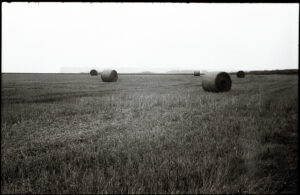
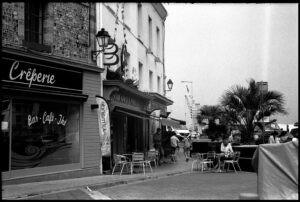
JW: I’m just crazy curious. I’ve always wanted to do things I’ve never done before and go to places I’ve never visited. It all started when I did an exchange program and spent a year in Bordeaux, France, during my second year of high school in Wuhan. Because the two cities are sister cities, and I had been able to speak French since I was twelve.
Originally, I was going to study at Sorbonne University in Paris after high school. I was accepted by the university however, in order to proceed, I had to do another interview with Alliance Francaise. At first, it was going all so smoothly, but towards the end, out of nowhere, they asked if I could speak English. I completely blanked because I practically ditched English for French as my second language, it was really embarrassing.
AW: Who would have thought, but your English is not so bad now.
JW: Thankfully, along the way came this scholarship offered by the University of Ottawa — I loved travelling, it’s a bilingual city, I could always go back to France afterwards I thought, so I packed my bags, and off I went to Canada, to study English! That would be 2015, when I started University.
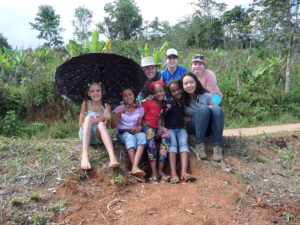
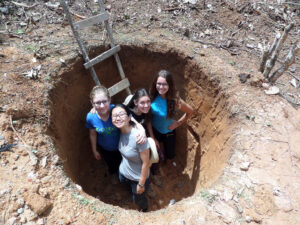
The first summer during my time there, I opted for a voluntary humanitarian project in the Dominican Republic that lasted five weeks. The preparation for the project itself went on for almost a year — fundraising, language learning and all that. It was an incredible experience, we were building houses, and I got to teach in local schools and so on. After I returned to Ottawa, I just thought, since I had already started learning Spanish, I might as well push further. I took on more Spanish lessons and headed to Salamanca in northwestern Spain for another school project soon afterwards.
AW: Looks like you’ve finally decided to stop sailing and settle in the city of London.
JW: You never know.
AW: If you must name one favourite city, what would it be?
JW: That’s really hard. I am very emotionally attached to Bordeaux, as you can imagine. Since I was there when I turned 16, I had a fantastic bond with the host family, and we’re still in touch. They are incredibly interesting and cultured people. I was taught a lot of things, even table manners for instance, which I didn’t get to learn back in China. I didn’t really have a social life outside of school back then either, so I do consider myself as having partly grown up in France for that reason.
But then I also love London, for all the different reasons. I wouldn’t go as far as claiming I’ve finally found myself after I came here, but I guess my personality and character just started to gel when I arrived. I got to make my own decisions as an adult, and it’s exciting to meet different people from all backgrounds every day. I just love people, man, because of all the travelling I tend to get on pretty well with almost everyone. Also, the jazz scene here is amazing. I enjoy going to galleries and museums too, of course, the diversity and cultural atmosphere are something that I haven’t really experienced before, and it’s incredible.
AW: How do you think all these experiences, living in different cities around the world, have influenced you as a person?
JW: Each one of them gifted me different things, which I genuinely appreciate. I was just talking about Bordeaux, which was my first cultural exchange and overseas experience — you always remember your first, right? (laughs) It was the first time that I learnt to stand on my own feet, how to act in society, how to behave among people and interact with strangers, learning all those soft skills that I didn’t have a chance to learn before.
Although not the biggest city in France, many Parisians move to Bordeaux, and generally, I would say the French were curious to know more about China. To a certain extent, some of the things they asked made me realise how little I knew about my own culture, which really put me to shame and, in turn, drove me to learn more about not only culture but history too. It was also about learning different perspectives.
It was a lot of fun, getting to understand French culture, especially through the language of French, like you know, sometimes if you are an adult travelling abroad, it’s hard not to compare, especially when everything has to be translated. While I was there, I was completely immersed. I was building everything up from zero, like a five-year-old basically, absorbing everything like a sponge. So now, when it comes to the French way of life, or even philosophical concepts or ideals, I’m able to grasp them quite well, more so because I can see things from an “insider’s” perspective.
AW: Cultural awareness.
JW: I guess not everyone likes to blend in culturally. For me, I enjoy being part of the crowd. I like feeling the connection between people, and I believe people should be connected. There are so many talks about globalism, but for me, the truth is, we still need more connections. A huge part of the crowd cares only about the differences, but as humans, we have so much more in common than we realise, and I would like to discover and build on those connections.
I sometimes wander around the street and speak to random people. The funny thing is, when you do that, people open up and allow you into their lives too. And I love it. You’re like a little spy, stepping into different people’s lives. Sometimes it could be a homeless person, or it could just be an older guy who’s bored, someone who cares deeply about what’s going on but doesn’t have anyone by their side to share their thoughts with. They’re happy when someone is willing to listen. And occasionally, I even get invited to secret parties as a result, which is fun too. It just makes you feel like you’re connecting — with people, and with the world.
Credits
Editor: Axel Wang
Photography: Courtesy of the artist