
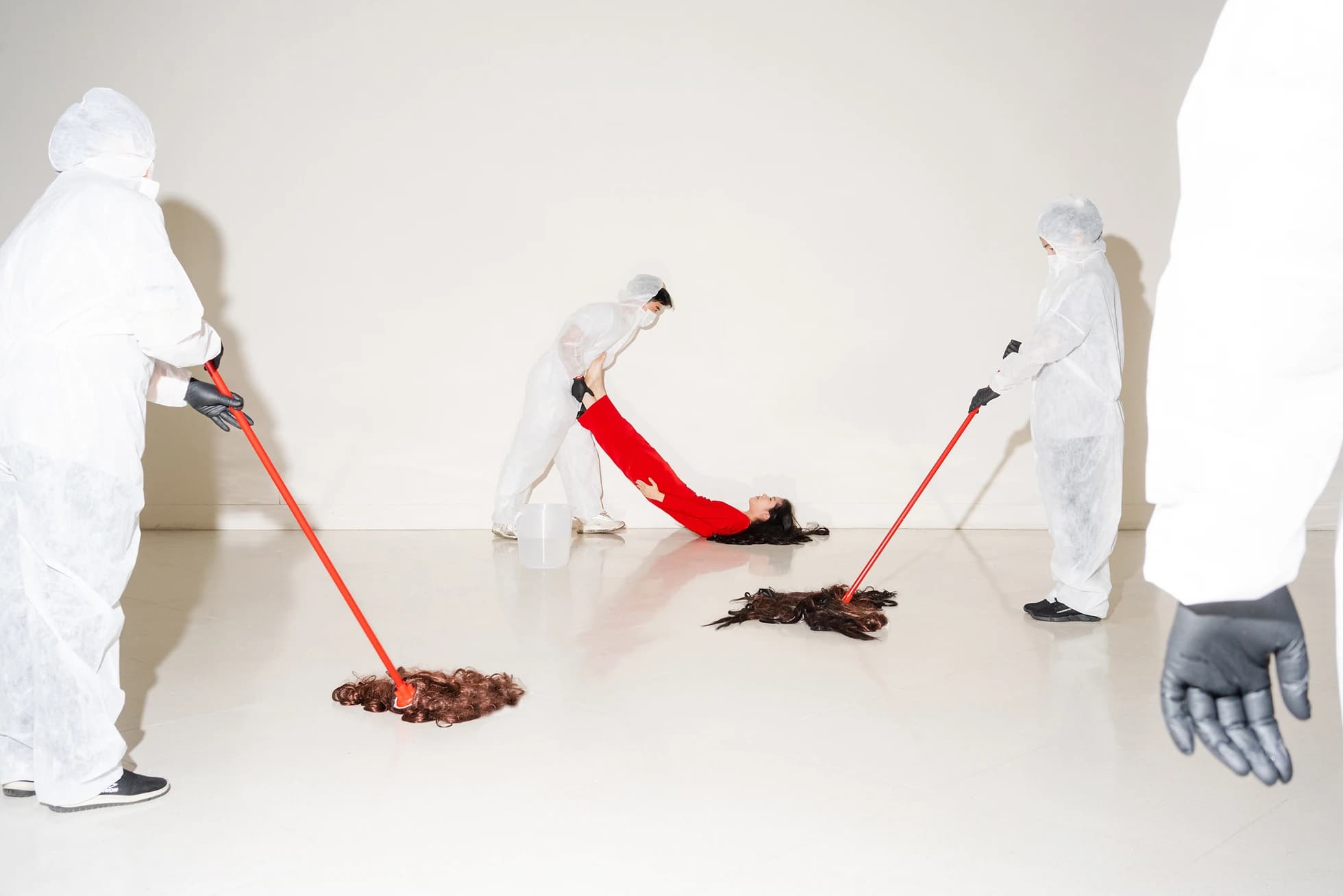
We conducted an interview with Kawita Vatanajyankur, a Thai artist educated in Australia and currently based in Bangkok.
A captivating figure in the contemporary art scene, Vatanajyankur is renowned for her thought-provoking, evocative and, to some, provocative performance pieces that explore the roles of women in today’s world, as well as societal structures and the human condition. Vatanajyankur’s oeuvre is characterised by the visceral embodiment of her own body in her live and video performances. Her videos often resemble works of painting, with colour composition and body movements reminiscent of brushstrokes on a canvas.
Through her artistic expression, Vatanajyankur confronts audiences with the stark realities of physical labour, particularly the burdens placed upon women in traditional Thai society. With a meticulous blend of physical endurance, symbolism, and thematic depth, her work transcends mere aesthetic appeal — taking a very much in-your-face approach — questioning uncomfortable truths and the intricacies of human existence in a time of rapid AI and technology advancement.
In the first chapter of our interview below, Vatanajyankur reflects on her experiences migrating to Australia at a young age, and later returning to Thailand as an artist. She discusses her struggles with cultural differences and how the influence of her late father led her towards artistic pursuits while studying at university in Melbourne. Through her celebrated series Tools, which challenges societal norms, Vatanajyankur shares insights into her creative process and personal growth, offering a glimpse into the complexities of identity in her art.
The Year of the Hare
AXEL WANG:
First of all, thank you again, Kawita, for taking the time to do this interview with us. I wish we could have carried this out under slightly better circumstances, with us securing the open-call opportunity and having the chat face-to-face during your visit to Japan. I have to say it was all very disappointing.
KAWITA VATANAJYANKUR:
Let’s not worry about it!
AW: Kawita, honestly speaking, this is perhaps one of the hardest interviews I’ve had to prepare for, simply because of the sheer amount of materials about you out there. I think I studied at least 20 interviews, articles, and videos about you before our chat today. Do you even remember how many interviews you’ve done throughout your career?
KV: I don’t remember exactly, it’s quite a lot. (laughs) I began my career as an artist immediately after finishing university, around 2012. I probably do an interview almost every month these days.
AW: That’s crazy. Do you generally enjoy doing interviews, though?
KV: Well, I do. I believe interviews, in a way, help me clarify what I truly intend to convey through my work. Some questions prompt me to consider aspects of the work I’ve never thought of before. It allows me to dig deeper into the meaning behind my creations — interviews are both a challenge and a valuable practice, actually.
It’s also an integral part of the job being an artist, you know, there’s the research, the execution, the post-production and all that. There’s the management side of it, and there’s also the PR side of it, and interviews simply constitute one part of that broader responsibility.
AW: Do you Google yourself sometimes?
KV: I do. (laughs) I like to stay informed, only occasionally though. (laughs)
AW: I remember you said you moved to Australia at the age of 14, right?
KV: Around 14 to 15.
AW: Do you remember what it was like? Were you scared, nervous, or were you more excited?
KV: I always wanted to study overseas, and I’ve always loved art and music since a young age. I guess the main difference between studying in Thailand and Australia was that, I came from a very strict school environment in Thailand, where expressing yourself and questioning the world around you was discouraged, which contradicted the essence of art, and I really wanted to get out of it. My dad supported my decision and took me to Australia, and eventually I enrolled at Westbourne Grammar School for its focus on art and music.
I had trouble adjusting to the new environment at first, not because people weren’t friendly, but because I had been so accustomed to remaining silent and not expressing myself in the past. When I was in Thailand, I felt like I was conforming to and playing this role of a “good girl”, who’s obedient, quiet and agreeable, always deferring to teachers and adults.
Hence, transitioning to a more participatory environment in Australia became extremely demanding, as I found it really difficult to voice my opinions and engage in class — I just couldn’t speak, you know. The school referred me to a counsellor, and it took about a year for me to sort of slowly break out of my shell. By the time I reached year 11, around 17 years old before university, I had become more expressive and outspoken, though not as much as I had hoped. Nevertheless, I was able to share my thoughts and raise my hands in class. I guess this marked the beginning of a new chapter in my life as a more confident teenager.
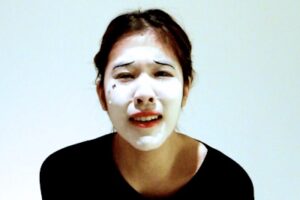
AW: I guess that applies to a lot of Asians when they initially migrate to the West, for whatever reasons, though it looks like you overcame the barrier eventually.
KV: Yes, I think I did. I think the environment plays a significant role — it shapes you, you know, it moulds you into who you are. If an environment sort of oppresses you, then you won’t be able to fully shine.
AW: You studied painting in university right?
KV: You did do the research! (laughs). In fact, when I was at the Royal Melbourne Institute of Technology (RMIT), I switched courses so many times. Initially, I was in fashion, and very soon I just felt that wasn’t really for me. I then moved to study textiles because I saw it as the more artistic side of fashion, which I genuinely enjoyed, even now, I still knit and crochet in my spare time.
However, what truly left me feeling unfulfilled was the persistent questioning: “Is this all there is? Are we merely designing and producing things?” I just thought there had to be more to life than that. I was in a phase of searching for meanings, as you can imagine, so I applied for Fine Art since I was already into painting.
I remember in my first Fine Art class, they posed the question: What defines beauty? If something conventionally deemed ugly — like bruises — holds significance, does it then become beautiful? It echoed the same question marks I had while designing and weaving in my textile course, as I constantly found myself questioning the true essence of beauty and what beauty entails. It was at that moment that I realised I was finally home.
AW: And you also took on photography, right?
KV: And right again! (laughs) In the Fine Art course at RMIT, we were encouraged to explore everything and ask questions — for instance, what does a painting mean? What does it symbolise? Is it confined to strokes on canvas? What are the theories of colours? How would we express ourselves artistically in a world devoid of traditional art tools like canvas and paintbrushes? I think the ethos influenced me profoundly.
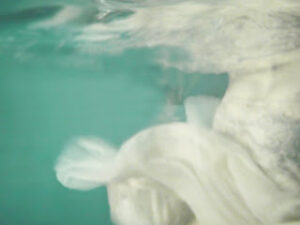
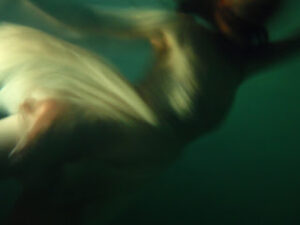
On top of photography, I also picked video art and installation art as alternatives, as well as gold and silversmithing, plus sonic art. And my prior experience in high school drama prepared me well for the performance classes too.
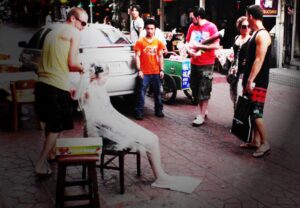
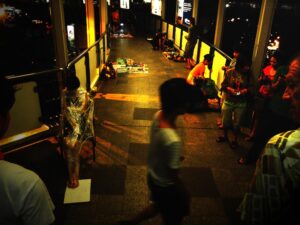
AW: That’s all boxes ticked!
KV: Indeed. I was encouraged to pursue whatever medium intrigued me. I guess you can sort of tell in my work nowadays, elements like colour compositions and brushstrokes are obviously present, motions are evident — the principles of painting are extended into performance and moving images. The Fine Art course opened so many doors for me.
AW: After you graduated from university, you were already on the path of establishing yourself as an emerging young artist in Australia. You had gallery representation, exhibitions, and various projects underway. Why, then, did you feel the need to move back to Thailand to further your career as an artist?
KV: Honest answer, I really had to come back to Bangkok and live with my mom after my dad passed away. My mom was left alone after sending my brother to study in England. I felt it was important for me to be there for her.
Career-wise, although I could see the benefits of exhibiting in Australia, at the same time, I just thought it’s actually not so bad an idea to give it a go in Asia, where people can truly relate to my work through shared cultural background and experiences. It’s like you and me — since we both studied overseas, you instantly understand feelings of shyness, or the constant fear of being wrong or embarrassed while living in a foreign country. On the plus side, it also meant that I could conduct further research into my roots, so I just thought, why not?
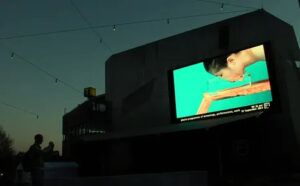
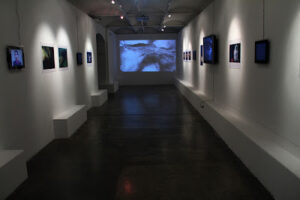
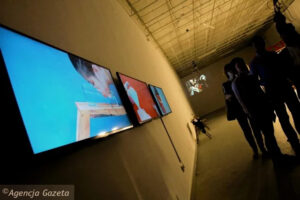
Especially around that time, Thailand began to host more international art festivals, and there were more cultural exchanges with museums in different countries. Like in 2014, Bangkok Art and Culture collaborated with a museum in Poland, allowing me to exhibit my work in Europe for the very first time.
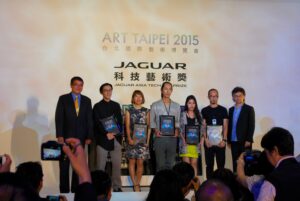
Working with Thai institutions also led to opportunities such as being a finalist for the Jaguar Asia Tech Art Prize in Taiwan, I think that was in 2015. Believe it or not, I’m still friends with some of the finalists to this day, like Chung-Han Yao (姚仲涵) and Richi Owaki (大脇理智). Thailand provided the platform for these significant opportunities to unfold in many ways.
AW: In an earlier interview, you said you felt like an alien in Thailand, returning from Australia after living there for 10 years. What were your struggles?
KV: Not being obedient? (laughs) It mainly came down to the cultural differences between Australians and Thais. Even now, I still face disapproval from older generations.
Professionally, I’m supposed to, and expected to, embody this avant-garde artist persona — pushing boundaries to the extreme, you know? (laughs) But privately, it’s a starkly contrasting world. What I do still gets frowned upon by many older people, and they would say stuff like, “What is an artist anyway?” “Why is she making work in such a provocative way?” I guess my work is still considered kind of inappropriate in the eyes of many conservative elders.
You know, in Thailand, we don’t commonly use the word “debate”. Voicing opinions can often be perceived as arguing or attempting to win the conversation, particularly for women, which can be interpreted as overly assertive or aggressive. So sometimes it’s a little bit hard to have a conversation with them about what I do.
AW: It seems like you still haven’t completely got used to the Thai way of things.
KV: No, of course not — that’s why I make art! (laughs) I think it’s also a generational issue, it’s the culture that we were brought up in. Unlike older generations, where girls were expected to be obedient and conform to societal roles, always saying “yes”, my generation and the younger ones get to challenge these norms more openly nowadays.
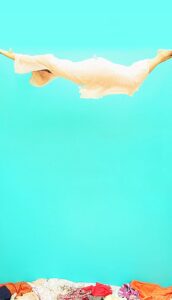
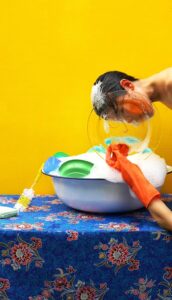
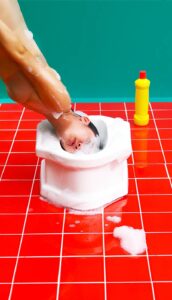
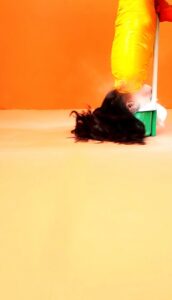
This was what inspired me to create my first work series, Tools, exploring how women are perceived in many societies, how we are expected to fit into certain roles in order to be understood, accepted, and respected by society, and to earn this qualification of being “good enough”. In the series, I transformed myself into various domestic objects, symbolising the pressure to fit into predefined roles — the series really stemmed from feeling alienated within Thai culture and from not meeting societal standards and expectations.
I believe it’s long been considered a taboo for women, historically and even today, to be outspoken or fearless. Instead of being viewed as brave, it’s often seen as inappropriate. In the series, I placed myself in uncomfortable situations where I had to completely transform myself into something that I was not. It was like a sarcastic commentary on society’s expectations, where conforming to certain roles is deemed necessary, even if it means sacrificing yourself.
AW: I’m going to change the subject a little bit. You brought up your father earlier, and you said he passed away right before you went to university. I can’t imagine what that must have been like, for someone at such a young age to go through that. Do you mind sharing some stories about you and your father?
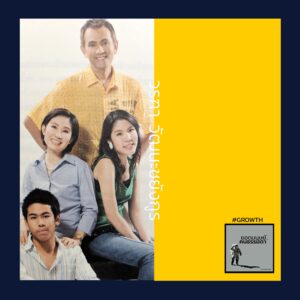
KV: My dad was a creative producer, and he was involved in the advertising and artistic scenes in Thailand back in the day. Although he held a PhD in education, he recognised that his inner strength lay in creativity. He was influenced by all these experimental films so, so much, that we would often stay up late to watch them together, and we would analyse characters development, their motivations and emotions, symbolism within the films, and so on.
AW: Do you remember any names of the films?
KV: Oh, there were so many of them — American, French, Japanese — we used to watch, sometimes two or three a day. I think that’s how my fascination with moving images began to take root. It wasn’t until I entered university that I realised it had always been a part of me. When lecturers at the university asked what medium best conveyed my narratives, I instinctively just answered moving images. Sound, motion, and symbolism are essential elements in my work.
That’s the impact my dad had on me. Even now, I often find myself wondering, “What would he make of this project? How would he bring this idea to life?” He continues to be a strong and guiding presence in my thoughts.
AW: Sounds like your dad was also like your mentor.
KV: In many, many ways, actually. I remember one moment so vividly from my high school years when I was 16, my dad said to me, “Do you know what’s the worst thing you can be?” I was just really confused, like, I was 16. (laughs) And he continued, “How did you become so ordinary?”
It was a time when I started to pay attention to my appearance — wearing makeup, dressing like other girls, I began to like what others liked, and followed trends, so to speak. It was kind of like I was seeking acceptance within a society where I so desperately wanted to belong, which wasn’t wrong, but thinking about it now, perhaps my dad’s words were a bit too harsh. (laughs)
He said that conforming to societal norms would prevent me from discovering my true self. Obviously, being only 16 at the time, I just nodded along, thinking to myself, “Okay, whatever, dad!” (laughs) Yet, looking back, despite the harsh words, I realised that the conversation was probably one of the main reasons I decided to pursue art at university. His words stayed with me over the years, and slowly I gave myself permission to explore, ultimately becoming the person I am today.
My university lecturer, Dr Phil Edwards, later told me similar things. He urged me to get out of myself, to shed these self-imposed constraints and to go beyond who I was. He said I was stagnating by clinging to a particular version of myself. Once again, I just didn’t know what to do, and I made the stupid decision to go and jump into the freezing ocean.
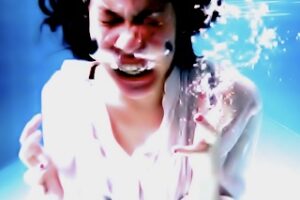
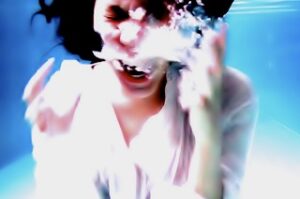
As you might have guessed, unsurprisingly, nothing came out of that dreadful experience. However, I do believe there was a brief and fleeting moment, like a glimpse during that ordeal, where I became slightly more fearless. It’s as if I sought to break free from my usual constraints metaphorically by placing myself in a dangerously extreme situation. Perhaps I did go too far, but at the time, I craved nothing but a cleansing of my old self.
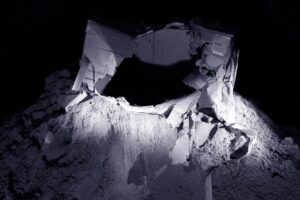
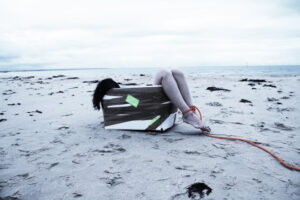
Following that experience, I began creating artworks centred around the theme of “getting out of something” before my university graduation. Those works reflected both the emotions I was experiencing and my desire to break away from my former self, living in a foreign country where everything was unfamiliar. Navigating life was already tough enough for me back then, transcending that version of myself in a foreign land was even more daunting. Within those works, there was a palpable absence of fear, accompanied by a sensation of confronting and grappling with the challenges and hardship encountered without giving up. In the end, I suppose something did emerge from jumping into the ocean. (laughs)
Credits
Editor & Design: Axel Wang
Photography: Courtesy of Kawita Vatanajyankur, unless otherwise stated.