
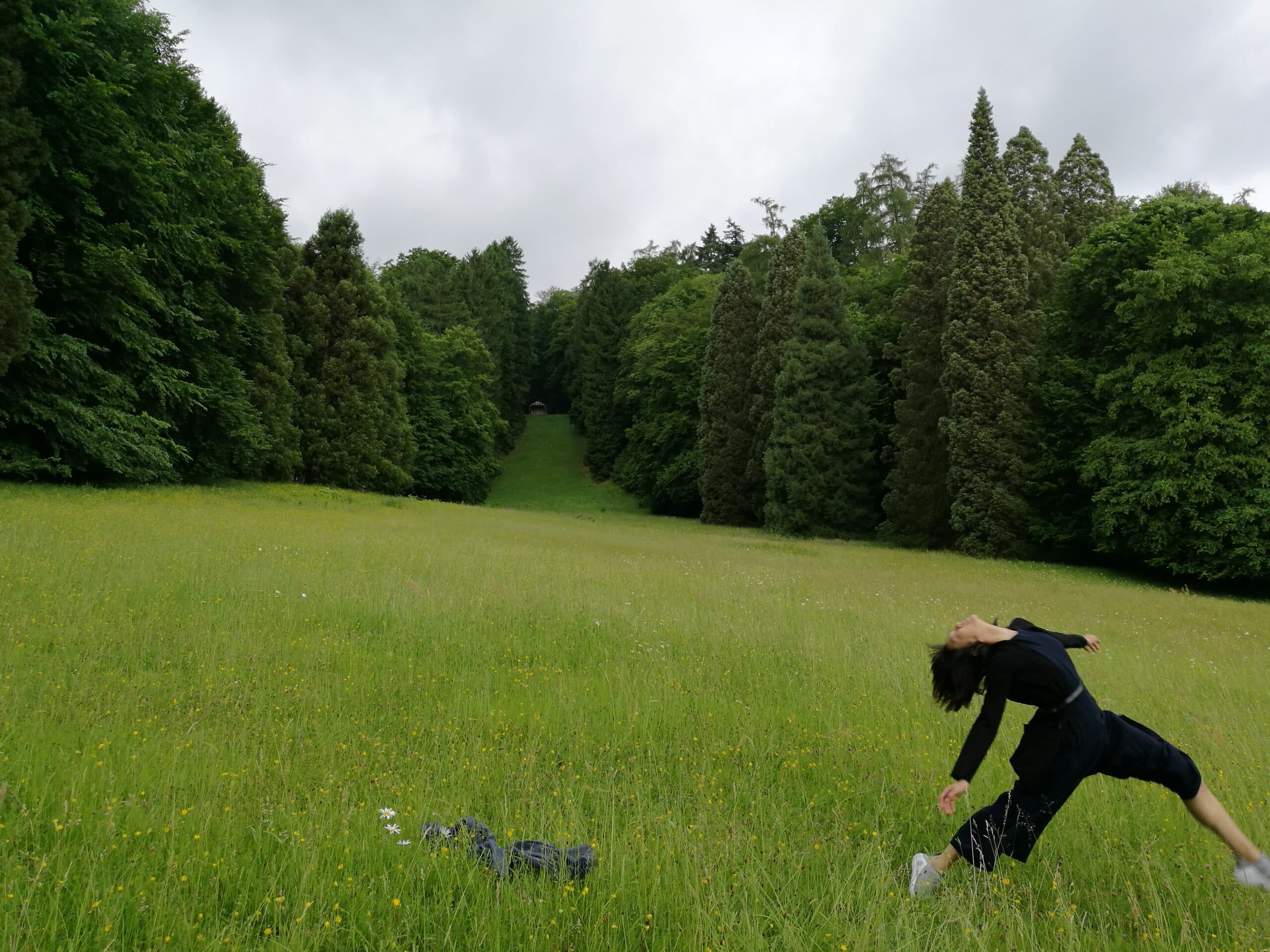
Dance Dance Dance 舞舞舞
AXEL WANG:
作为舞者也好,艺术家也好,很难免会被问到一个问题:“这是什么意思?”
As a dancer or an artist, it’s impossible to avoid being asked the question, “What does this mean?”
LICO KEHUA LI:
我们舞者之间可能在学术讨论时会问到这样的问题。但是我自己本身在跳舞的过程中,是不会考虑这个问题的。
We would probably address it when there’s like a seminar among dancers, but when I’m actually dancing, the question would never cross my mind.
AW:从观众的角度出发,比如很多人走进美术馆看到一幅画,大家总会想要探讨艺术家创作的动机跟目的到底是什么,或者画作背后的含义。
Standing from a viewer’s perspective, it’s like when people walk into a museum exhibition hall and see a painting, they tend to question the meaning behind the work, naturally, what the artist is trying to convey, what the intention is, motivation, and so on.
LL:大家的确会好奇,我为什么要这样跳,为什么要那样跳。就像问画家你为什么用这个颜色,为什么用这个线条,问音乐家为什么用这个和弦。对我来说,跳舞跟创作是两回事,每日的练功又是另外一回事。当我在跳舞的时候,我不会考虑缘由,本能地身体就会开始移动。那个时刻,反而是最直接的表达,你的身和心是统一的,你和观者以及整个环境和氛围都融为了一体,无需过多的言语解释,所有沟通屏障都可以被打破。在那一刻,你甚至可以跟很陌生的人成为朋友,那是一种很妙不可言的体验。当然,并不是我跳舞的每刻每秒都能达到这种状态。艺术是脱离语言限制的表达方式,当我们大脑中那么多的感受和画面无法用语言来形容时,艺术就产生了它的作用。
我觉得只要人在创作,难免会将自己的主观意识形态夹杂在其中,因为你想要表达自己,想要传达信息给别人。创作过程开始从本能表达,转变成刻意输出 — 在怎样的环境下,创作什么样的作品,给特定的人群看,目的性会变得非常明确,无形中生成了一层障碍。这时难点可能就在于,我们要如何打破这层障碍,与别人建立深层的、超脱肉体的、精神层面的连接。所以我认为伟大的舞者和伟大的创作者是两条不同的路途,他们的追求和遇到的困难也都是不同的。
True, many are curious indeed, about why I move the way I do. It’s like asking a painter why they chose a certain colour or line, or asking a musician why they used a particular chord. To me, I separate the act of dancing from the process of creating, and also from everyday training and practice.
When I dance, I don’t overly consider the “whys” — the movements are all instinctive. In that very moment, it evolves into the purest form of expression — the body, the mind and the entire surroundings, including the audience, are all merged in sync, completely unified, erasing the need for anything verbal. All communication barriers are shattered, you can even bond with complete strangers in that instant — it’s an inexplicably beautiful sensation. It doesn’t happen every time that I dance, but yeah, art serves as a means of expression that transcends the constraints of language. When our minds are flooded with countless emotions and images that defy clear verbal descriptions, that’s where art comes in.
I believe that whenever and whoever engages in the creative process, it’s impossible not to project their own subjectivity into the work, because ultimately, we want to express ourselves and convey messages to others. The creative process gradually transitions from instinctive self-expression to intentional output – what kind of work you create, under what circumstances, and for which audience all become increasingly purposeful.
And with that purpose, invisible barriers begin to form. How do we break through the barriers to establish meaningful connections with others on a more profound and spiritual ground, transcending the physical realm? I think there’s a fundamental difference lying between the path of a great dancer and a great creator, each with their own pursuits and struggles.

AW:以色列的一位编舞家,Gaga的创始人奥哈德·纳哈林 (Ohad Naharin) 有说过,每个人都可以跳舞,没有任何技巧是完美的。跟你不一样的是,纳哈林先生在二十二岁时才接触舞蹈,但你从三四岁就已经开始系统地接受舞蹈的教学和训练。在你个人心中你觉得怎样的舞者才能称得上好的舞者呢?
Ohad Naharin, an Israeli choreographer and founder of Gaga, once said that everyone and anyone can dance, there’s no such thing as perfect dance technique. Unlike you, Mr. Naharin did not start dancing until the age of 22. You had gone through rigorous training and dance education since you were 3 or 4. Personally, how do you define a great dancer?
LL:我离开雷动天下的第一站就是以色列,那时在Gaga的训练营呆了两个星期。我觉得这个问题的答案取决于特定的环境。在不同背景环境的要求之下,对一个好舞者的定义是不一样的。譬如说你身处一个舞团,你要做到的就是快速地调节你的身体,你得执行编舞的想法和完成他的要求。
然而反过来,比如说一些野生的舞者,尽管他们没有从小学舞蹈的经历,没有很好的软开度,没有很强的技巧性,我还是非常欣赏他们的舞蹈,并且我在看他们跳舞的时候可以很平静。我能够跟随他们上下起伏,有一种我站在原地不动时也能与他们共舞的感觉。
又好比一些原生态舞者,可能因为家庭背景,他们有天生的本能,当音乐响起时,他们能展现出很强烈的能动性与感染力。虽然这些舞者的类型各自都有所不同,但在不同的环境中,他们都创造出了各自的价值。对我来说,别人能因为你的舞蹈,与你建立了连接,这就是一名十分优秀的舞者了。
After I left BeijingDance / LDTX1, Israel was my first stop, where I spent two weeks at Gaga’s training camp. I believe the answer to your question really depends on the context. Under different environments and expectations, the definition of a “good dancer” changes. For instance, if you are part of a dance company, your ability to quickly adapt, and execute choreographic ideas and demands, is crucial.
On the other hand, there are independent dancers, who may not have had formal dance training, or lack sufficient physical skills and technical precision, yet I still deeply appreciate their work and movements. Watching their performances feels calming, somehow I can synchronise with their every rise and fall, like I’m dancing alongside them, even while standing still.
Similarly, some dancers who specialise in performing traditional or indigenous dancing, perhaps due to their background or family influence, they possess innate instincts and radiate a profound sense of vitality, and their dances carry a remarkable emotional power. While they may be categorised as different types of dancers, in my opinion, as long as you are able to establish some form of meaningful connection with others via your movements, you are more than just an exceptional dancer already.
AW:访问一开始你提到了刚加入雷动天下那段时间花费了很大的力气去适应,你觉得那段时间是至今为止你的舞蹈生涯所面临到最大的挫折么?
At the beginning of the interview, you mentioned how difficult it was to adapt to and familiarise yourself with contemporary dance at LDTX. Would you say that period was the greatest hurdle of your career so far?
LL:其实并不是。反而是现在,我感觉我在面临人生至今为止最困难的一个阶段。刚加入雷动那时的确也难,但那个坎儿终究还是迈过去了。现在觉得难是因为,比如说当我开始很享受旅行的状态时,或者想要尝试更多的国际合作时,因为疫情,一切都戛然而止,我被迫静止地处在一个地方。当我试着在一座城市停留,又发现好像无法找到一处属于自己,愿意完全接纳我的城市。现在会有些迷茫,缺少了一个很肯定的方向,我没有太多的空间能够和周围的人和世界产生碰撞。好像是我身处在一个房子内,但同时却被一个巨大的铁笼笼罩着,我无法逃出去,所有的信号也都被屏蔽了一样。
我现在不再只是一个单纯的舞者,我开始更多地承担了编舞师和教员的角色,也开始了线上授课,透过小小的屏幕尝试与更多人接触。在这个过程里,我很努力地试图用语言让别人理解舞蹈。尽管对我来说非常挣扎,但无形中很多其它方面的能力也得到了提高。像是最近我在曹盾导演的一部古代历史题材的新电影《敦煌英雄》里担任了编舞师,我需要不停地转换我自己的角色。编舞之外还必须要跟音乐家,灯光师,服装造型,包括演员等不同的部门去协调工作。
同时我也在尝试创立一套自己的运动逻辑,叫《意识与身体》。整套体系是在探讨大脑的意识和身体运动本能间的相互作用,通过技术性的训练与意识层面的互动,不断更新我们对自己身体结构和思维意图的了解。在各种新的尝试下,起初我作为舞者这个单纯的身份,就变得不再那么单纯了,所有平行的事物都处在一个起步阶段,一个新的起点。从前跳舞很单纯的快乐也不再那么快乐,所有的挑战都形成了一个巨大的混沌。
Not exactly. True, LDTX wasn’t easy at first, and somehow I survived. In fact, right now, it feels like the most challenging stage of my life. What feels difficult now is something else entirely…like um, just as I began to enjoy my journeys and explore international collaborations, this sudden halt caused by the pandemic forced me to remain very stagnant, even when I tried to settle, I came to the realisation that there is an ongoing struggle to find a place where I could genuinely fit in. This confusion has left me without a clear sense of direction, with extremely limited opportunities to engage, and collide with the world. It feels as though I’m trapped inside a confined house, that is itself enclosed within an imposing iron cage, which blocks all signals coming in and out.
Perhaps the reason for this also lies in the fact that I am no longer just a dancer. Taking on the roles of a choreographer and tutor, with online teachings and everything, I strive to connect with a broader audience through a tiny screen. During this process, it takes a tremendous amount of effort to explain the art of dance through language. It’s extremely challenging, even though it has unintentionally honed various aspects of my abilities. Like I recently worked as a choreographer on director Cao Dun’s new historical film Heroes of Dunhuang2, my roles had to constantly shift in order to coordinate with musicians, lighting technicians, costume designers, actors and many others.
On top of it, Consciousness and Body is a new system of movement methodology that I’m trying to develop. I attempt to dive deep into the intricate interaction between conscious thoughts and intuitive bodily movement. Through technical training and engagement of the mind, I hope to continuously refine our understanding of the body structure and logical thinking.
With every new attempt, my identity as a dancer has definitely evolved beyond. The sheer delight I once found in dancing has now become intertwined with new beginnings and challenges, resulting in magnificent chaos.
“As time passes, people, objects, they all increasingly become blurry and distant in our minds.”
“随着时间的流逝,很多人事物在我们脑中的印象逐渐变得模糊,离我们远去。”
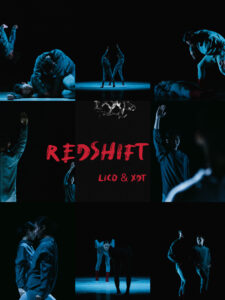
AW:刚才你提到了编舞跟教学两个部分,我们可以聊聊关于刚落幕的《四相》这个表演。
You just mentioned choreography and tutoring. Shall we talk about the dance choreography that you did for the performance As Four3?
LL:《四相》是由四部舞蹈作品组成,四种风格,呈现四种不同的状态。我在其中的作品叫《红移·遗忘曲线》,是一部二十八分钟,半台的编舞作品。
我从很久以前就一直有一个感觉,每当回望我的过去,我感觉所有事情都离我十分遥远,就好像今天这两个小时的对谈,从回顾三岁时到今天,我跟你讲的很多过去我都不确定到底是真的还是假的 — 我脑中的所有,我所相信的一切,究竟是我自身的记忆,还是别人灌输给我的。
“红移”这个概念,实际上是物理学和天文学的一个名词,它描述的是天体正在往远离观测者的方向移动,它发出的光波波长变长,信号频率降低,从而在光谱上呈现出向红色方向移动的现象。就好像是在黑夜中一辆警车从你面前驶过,声音越来越远,视觉,视角都越来越模糊,这个状态就跟我刚描述的感觉很像。好多记忆和我对过往的一些印象,许多画面,都并不完整,似真亦假,我只能用我自己的语言,努力地把所有碎片拼凑在一起述说给别人听。
有一件挺值得一提的事情是,这部作品的编舞开始于2022年3月份,在接下来大半年多的时间里,因为疫情各方面的封管,整部作品分成了四个阶段完成。各阶段的排练我所能分配到的时间都非常短暂,大概都在一周到两周内,一天可能也就只有三个小时。恰好跟整个作品的概念又有点不谋而合。它始终是呈破碎状,拼接组装而成,甚至连《四相》整台作品的演出都分成了两个阶段。
我觉得《红移》也正因为是在这样的环境下诞生,她的价值也随之产生了。她并不是为了讲述一个多么明白的事情,她所刻画出的就是一个当下的状态,仅此而已。我们现在所处的这个社会环境,给我自己带来的这么一个状态。而这个状态是零散的,是分裂和拼凑的。我所有的时间和记忆,呈现在舞台上的画面,全都是破碎的。
演出的过程由始至终都是在一个没有缘由的状态下,画面会进行快速切换,对观众来说可能会因此感到困惑。但有趣的是,观众给我的反馈却是在这样一个被迫接受画面切换的状况下,反而在他们脑中能留下一两个非常强烈的画面。一部作品能留给观众的,其实也就是那一个或两个画面。这些画面在观众脑海中反复重播,从而产生了对每个个体来说独一无二的意义,这是不是也是“红移”的概念呢?
随着时间的流逝,很多人事物在我们脑中的印象逐渐变得模糊,离我们远去。当我们试图抓住它,最后往往只有一两个画面残留下来,而我们就认为那是一个完整的过去了,这大概也就是我想说的遗忘曲线吧。即使只有零星的浪花能留在海浪拍打后掠过的海岸线上,对我们来说可能已经无比珍贵了。
As Four consists of four pieces of dance performance, each showcasing a different style and portraying a distinct state. My part is a half-hour choreographic work titled Redshift: The Forgetting Curve (2022).
For the longest time, I’ve grappled with the notion, with this feeling, that whenever I reflect upon my past, everything appears so distant and so elusive. Like, we’ve been talking for almost two hours now, revisiting my childhood memories up to the present, and I’m not even sure if those memories are real or not. All these memories, all these things I believed happened, they all leave me with this feeling of uncertainty, of whether they are genuinely my own, or if they are impressions imposed upon me by others.
Redshift draws inspiration from a concept in physics and astronomy, describing the phenomenon in which celestial bodies move away from the observer, causing their emitted light waves to elongate, their signal frequencies to decrease, and the visible spectrum to shift towards red.
It’s like a police car passing by in the darkness, the sound fades into the distance, while the images itself becomes increasingly blurred. That sensation feels very close to what I’ve been trying to describe.
Many memories and impressions from the past feel incomplete, as though something is missing, in a way that they seem to echo the truth, but at the same time appear to be illusions. All I can really do is try to piece those fragments together through my own language and tell the story as best as I can.
One thing worth mentioning is that the choreography for this piece began in March 2022. Over the course of the next 6 months, due to various pandemic-related restrictions, the production also had to be divided into four stages. The rehearsal periods for each stage were extremely brief, typically lasting only one to two weeks, maybe only three hours a day.
Interestingly, this fragmented process unintentionally aligned with the concept of the entire work. Everything remains fractured and assembled, to the extent that even the performance of As Four had to be presented in two separate phases.
Redshift was born under such circumstances, and it is precisely through these circumstances that its value emerged. It is not meant to send out any clear message, but rather depicts the current state, nothing more. The current social environment we’ve been living in has left me in a fragmented and disjointed state. All my memories, my sense of time, and even what’s being presented on stage, are all fragmented and somewhat shattered.
The performance unfolds through a continuous sequence of abrupt transitions, which I think may have confused the audience at times. Interestingly enough, the feedback I received was that, despite the rapid shifts, one or two exceptionally vivid moments remained deeply implanted in their minds.
Perhaps that’s all a work can truly leave behind. Those one or two images replay repeatedly in people’s minds, gradually taking on unique meaning and significance for each individual. I guess that’s also part of the idea of Redshift.
As time passes, people, objects, they all increasingly become blurry and distant in our minds. When we try to hold onto them, only one or two images linger, and somehow we convince ourselves that those fragments represent the entirety of the past.
And perhaps that is what I mean by “the forgetting curve”. Even if only a few sporadic traces of foam remain on the shoreline after the ocean waves recede, those traces may already be the most precious thing that we are able to keep.
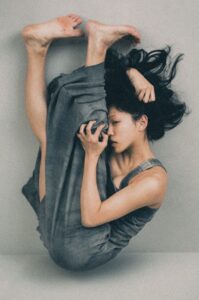
AW:现居德国的美籍编舞家威廉·佛塞 (William Forsythe),之前在一篇访谈里将舞蹈的事业 (career),与舞蹈的人生 (life),做了一个区分。你是怎么看待舞蹈的呢,在现阶段对你来说,她是事业还是人生?
William Forsythe once drew a line between a dance career and a danced life, which one do you incline more towards at the current stage?
LL:我不知道我是不是真的会跟舞蹈有一辈子的联系。现在回头看,不多不少会有些遗憾。当你做了一个选择之后,因为这个选择你要放弃很多其他的可能性。我不敢去参加别的运动,因为害怕受伤。可能我性格也有点执拗的关系,我这辈子到现在都花了很多时间在舞蹈这件事情上,意味着我并没有很多青春期同龄学生该有的经历,像是玩游戏,去舞厅,KTV什么的。我觉得我好像也失去了很多作为一个普通青少年,对生活或者对于错误的那种体验。所以你说之后我是否真的还要一直跳舞或是做舞蹈吗,老实说我也不太确定。我现在就是处在人生中最灰的那个状态,颜色并不是那么鲜明。
佛塞先生已经是舞蹈界大师级的人物了,但是他现在好像偶尔也脱离舞蹈,跳出舞者的身份,探索装置艺术,研究电子音乐,在做一些可能跟舞蹈并不是那么相关的事情。当然我也不知道他的想法是什么,希望有那么一天我也可以问问他关于舞蹈跟人生间的关系,是不是我一辈子都得要跳舞,也许他可以给很多跟我一样的年轻人一个有趣的启示,开拓更多可能性 。
Honestly, I don’t know, if I’ll have a forever lifelong connection with dance. Looking back now, there are regrets, to some extent. Once you make up your mind to dedicate yourself to one thing, it practically means giving up other options, right? Like I couldn’t really do any other sports because I was always afraid of getting injured since I started dancing.
I guess it’s just me being stubborn. The moment I decided I was going to dance, I kind of just never looked the other way. I don’t even know how much of my life I’ve actually devoted to it at this point.
When comparing myself to other teenagers growing up, I think somewhere deep down I do feel like I’ve missed out on just being a teenager, I never got to experience the things they did — missteps, karaoke, clubs, stupid teenager stuff, you know.
So when you asked whether dance is going to become my life or just my career, honestly, I’m not sure myself either. Right now, I feel like I’m in the greyest and most uncertain phase of my life, the colours are just a bit dull, you know.
Mr. Forsythe is already a master figure in the dance industry, yet it looks like he occasionally ventures beyond dance, exploring installation art, electronic music, and engaging in activities that may not seem directly related to dance at all. Obviously, there’s no way of knowing exactly what he thinks, but I do hope that one day I’ll be able to ask him about the relationship between dance and life, whether dance really has to be a lifelong thing. Maybe he could offer younger people like me some unexpected insight, open up a few more possibilities.
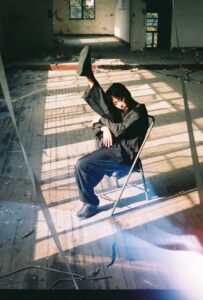
AW:台湾舞蹈家简晶莹(Ching-Ying Chien),说过自己这一辈子80%的时间都奉献给了舞蹈。别的一些生活上的事情,她已经不了解了。感觉跟你述说的情况很类似。
Ching-Ying Chien4, a Taiwanese dancer, once said that she dedicated 80% of her time to dance, and she felt that she didn’t even know too much about any other things any more. It’s quite similar to what you just described.
LL:有时我会想,也许我不再跳舞,也不从事与之相关的工作了。我很喜欢画画,我也很喜欢研究吃的,也许我可以转头去画画或者成为美食博主什么的。我也特别喜欢旅行,很享受在路上的感觉,有时甚至会想端端盘子,去体验一下不同的人生。或者是去一个孤岛,做一个牧场主,养很多的动物。我会有很多奇奇怪怪的想法,构想过非常多跟舞蹈没有关系的人生。我认为人生还有很多可能性,如果我想去做,为什么不呢?仍然可以去尝试,现在说遗憾太早了,等到没有选择余地的时候,才真的叫遗憾。
I ask myself this question sometimes: Do I really want to continue dancing or pursue related work for the remainder of my life? Like, I enjoy painting, and I have a massive interest in food as well! I love travelling and being on the road, like I told you. Sometimes I even picture myself holding a tray somewhere, experiencing a completely different kind of life. Perhaps I could sail to a solitary island and become a rancher, surrounded by all kinds of animals.
My mind is loaded with all these whimsical ideas, envisioning lives far removed from dance. I genuinely think that life holds countless possibilities with tons of options, and it’s never too late to try something new.
Footnotes
1. BeijingDance / LDTX (雷动天下现代舞团) is a prominent dance company based in Beijing, founded in 2005 by Willy Tsao and Hanzhong Li. Dynamic and versatile, the company combines elements of traditional Chinese culture with innovative choreography and diverse artistic collaborations. The performances are often powerful and thought-provoking, exploring social, cultural, and human experiences.
2. Heroes of Dunhuang《敦煌英雄》is an upcoming movie directed by Cao Dun (曹盾) and with a screenplay by Ma Boyong (马伯庸), based on the historical events of Dunhuang during the Tang Dynasty.
3. As Four《四相》 is a collection of four contemporary dance works directed and produced by Xiexin Dance Theatre (谢欣舞蹈剧场), choreographed by four individual choreographers respectively, Kehua Li included, premiered at the Grand Theater of Shanghai International Dance Center (上海国际舞蹈中心剧场) in 2022.
4. Ching-Ying Chien (简晶莹) is a Taiwanese choreographer and dancer. She has worked with Akram Khan Company since 2023 and with James Thierrée since 2020.
Credits
Editor: Axel Wang
Photography: Courtesy of Lico Kehua Li