
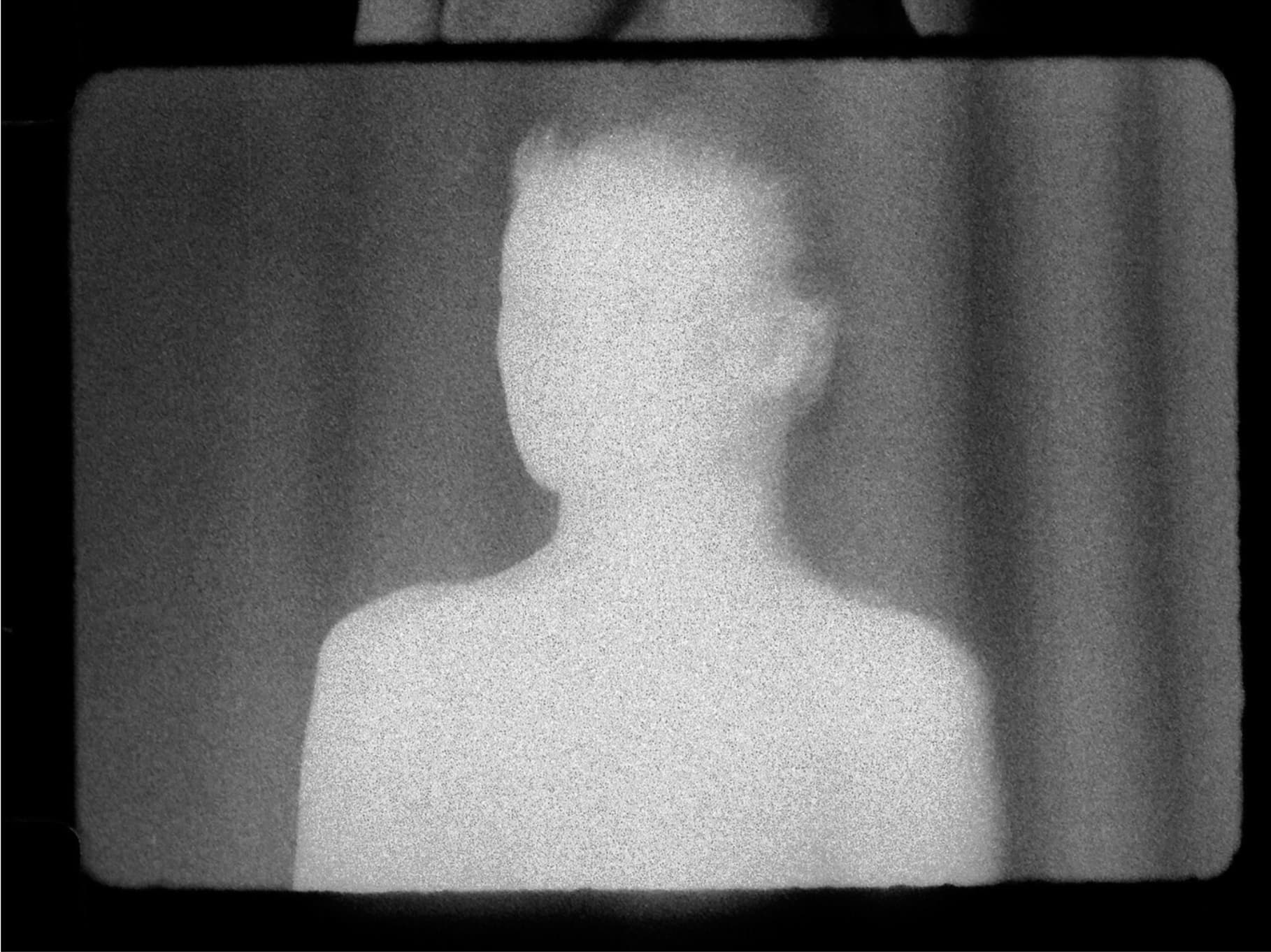
The Transformation

AXEL WANG:
In your previous interviews, Loreal, you mentioned Louise Bourgeois and Dorothea Tanning as your inspirations. There is one artist in particular that I wanted to talk to you about, and that is Francesca Woodman1.
I, for one, have always been drawn to her work since I was young, purely because of the aesthetics, the washed-out grey, the slightly seductive and erotic postures, the settings of abandoned buildings with debris, etc. Despite the many differences between Woodman’s work and yours — the styles, themes and perhaps the underlying messages too, there do exist, on the other hand, some parallels and elements of similarities between you and her — you both use a camera, you both dwell in surrealism…
LOREAL PRYSTAJ:
We both use our bodies.
AW: Exactly, and for the same reason — convenience. You both come from a family of artists too. Isn’t it strange for you to experience all these parallels with another artist who once lived?
LP: This question of what inspires me, I always find interesting. The reality is, what inspires me is my own life experiences, the surroundings, the people I meet, the interactions and conversations I have and how I respond to those scenarios that arise. But then, often what I am asked when someone sees my work is, who influences you, what artists inspire you? I feel more parallels and understandings, and again, I’ll use the word “affinity” towards artists I like. Their determination, focus, and story inspire me — that’s where most of the inspiration lies for me, which motivates me.
When I was at Byrdcliffe and created the series Between the Cracks (2014), a black-and-white series in which I photographed my body in vacant rooms within a cabin-like space, I didn’t know about Francesca Woodman at the time, until somebody came to visit the artists in the residency and, upon seeing the series, she said, ‘Wow, this is very Francesca Woodman.” And I was like, “Huh, who is she?”


I looked her up afterwards, and I loved her work. Looking at her photographs, I felt more of a connection than inspiration. She was such an intuitive creator — I could feel it — I know that her art can be described as dark and moody, or depressive in feeling, but I see her work and I perceive, she was getting so much enjoyment from creating. It was playful, it was fun and imaginative. I related a lot to the experiences she was going through when she was living in Brooklyn, but I don’t perceive that she was depressed emotionally in her essence, instead, I think she found the world to be a very beautiful and mysterious place — so I perceive.
But this, perhaps, people of her age, at the time she was living, could not connect with that… and that disconnect might have been what felt depressing for her. It’s funny to see her work, being described as if she were always this dark person — maybe she was — but I think Brooklyn may have been a place she felt disconnected from, and became depressed by. Again, this is mere perception.
…And I think it may have been that disconnect that resulted in her unfortunate death. So, when I learnt about her, it was more of a motivating factor, to continue doing my work and stay strong in how I see the world by sharing my perspective, even if no one can connect to it — I would have loved to meet her.

AW: I think we tend to, especially with artists who passed away, put a halo around them, we mythologise perhaps a little bit too much sometimes.
LP: At the end of the day, we are all just projecting, whether it be the artists or the viewers, even myself. When I engage with somebody else’s work, I’m aware that I’m projecting my perspective onto it, which may have very little to do with their actual experience. I think who Woodman was as an artist was phenomenal, and her work was phenomenal and still is. Just taking it for what it is already is a great inspiration in itself, in fact.
AW: At the beginning of the interview, you talked about the work you did in Denmark, Urds Brønd (2023). Looking at your artistic career from a bird’s-eye view, you’ve transformed, from themes of self-portraiture and the domestic, to nature and now to mysticism, you expanded from photography to working with space. Would you say these transformations are all natural, or are they more like deliberate deviations?
LP: I think it’s a very natural transformation, in the sense that it comes authentically. At the start of our conversation, we were talking about this ability to let go. So first and foremost, what attracted me to working with larger medium, like installation, for example, rather than just photographic prints, was that during my degree show at the Royal College of Art (RCA), I was given a space to show everything I had produced over those two years. I was working on so many things — there were photo projects, I was playing with patterns, doing sculptural works, and there were moving-image pieces — I had no idea what to show.
Suddenly, it occurred to me that everything was connected. Within that space, I created this imaginative domestic room, where I designed wallpaper and installed a telex slide machine that transformed into something like a television or kitchen microwave. The whole experience allowed me to see how well I could assemble different media to create a dialogue and become stronger together. Perhaps a single photograph alone might not speak as loudly conceptually, until it was placed beside other works, in dialogue with other media, like sound or sculpture — that’s when the multidisciplinary approach started to emerge.

You probably notice that when we’re having a conversation, I tend to jump here and there, but then at some point, it all comes together — so I hope. (laughs) I create work in a very similar way. I don’t always know what the heck I’m doing, but I trust the process, and it always comes together. A friend of mine used to tell me that my creative process was like watching a bunch of threads dispersed, which were my ideas with endless possibilities, then at some point, all the threads would start to weave together, becoming this one, refined, clean string, conceptually speaking. When she said it, I could relate to this metaphor as a visual artist. So long as you see only one thread, it will probably not make much sense, until you are presented with other works.
As for the themes in my work, a lot of the domestic work, I think, had to do with certain roles that I found within myself and feeling like I needed to disrupt them, or get out of them. I’ve always loved adventures and exploring nature, etc. Ironically, despite that being where I feel most pulled and inspired, I have created so much work in the domestic spaces. It wasn’t only me trying to work through and resolve something that was coming through me, but I was also influenced to continue making that kind of work, as I had already produced so much of it, and it was what people kept asking me about — it was like my past work was always being discussed in the present, which I am sure had an influence on me.

In the midst of all that work being talked about, behind the scenes, I was recording my dreams. I was reading books by Carl Gustav Jung, looking into psychoanalysis, and was most inspired by things from life’s spiritual and mystical aspects. I’m still on that journey, personally and artistically, of learning why I am currently drawn to these topics.
Once I gain a bit more understanding of why I am creating certain works, for example, my domestic pieces, I then reflect on my personal life and try to dig deeper. And currently, as I dig deeper into myself, I feel like I am entering a sacred archive — may it be biblically, mythologically, or centred around deities. Nature, mysticism and storytelling are all coming through right now.
So I would say the reason my work has undergone such a big transition, so to speak, is because I am changing and transforming all the time. I’m at a new chapter in life where I am also confronting parts of myself and learning more about myself, which feels extremely natural.

AW: We also mentioned the pandemic not too long ago, any reflections at all?
LP: Oh, my gosh, at first it felt like a limbo. I also felt like time somehow expanded, as though it were a rubber band being pulled for two years, then suddenly the pandemic ended. Things started opening up — call it the universe — let go of this rubber band, which snapped and sprung into somehow feeling like time was catching up to itself, like a fast track, it feels like everything is happening so fast right now, for all of us, collectively.
I did a collaboration during that time with filmmaker and photographer Sara Marinangeli. It’s a film piece called NON (2021). It was very much about visualising what that limbo felt like during the pandemic, almost as if we were frozen in time and becoming these statuesque sculptures, metaphorically speaking. How we envisioned it, was not as a film to sit down and watch from beginning to end, but more so a moving image projected in a dark space to evoke an emotion, while people immerse themselves in the space, becoming part of the sound and visuals.

During COVID, artistically, I was experimenting more with body casts, and how these live casts similarly encapsulate a specific moment in time, much like how a photograph does. All these parallels and overlaps between the two media were very evident to me — how the medium of sculpture captures my face from a specific moment in time, for example, so too, does the photograph. It was a thought-provoking time as I started to reflect on who I am as an artist and where I was going, and I began to see that much of the domestic work I did was a chapter coming to an end — it’s not the place I’m growing into, but a place I’m growing out of. And what is it that I’m entering right now? So honing in on that, and diving into that, is how I have entered into something more mystical and spiritual. While incorporating nature, and simultaneously discovering parallels to the subconscious, the body, and the universe. So, it’s rather a new chapter for me.


AW: Final question, Loreal, you’ve lived in so many parts of the world, let’s pick a favourite!
LP: Well, considering my mind, body and soul, I’m going to give you three places, that suit each. Right now my body and soul feel positively aligned in London, like I’m fully present here. Have you ever been somewhere physically, but maybe emotionally or mentally, you’re somewhere else? I remember once before I left Manhattan, I felt like I was physically there but mentally was in London already.
There was another time — I don’t know where I was emotionally at the time — but while I was going through a breakup that I mentioned previously, I was physically in Ukraine, maybe mentally too because I was focusing on a project, but emotionally, a part of me was still in London because my heart was broken. I perceive that when we’re present with our mind, body and soul, is when we feel most in alignment.
Mentally, one of my favourite places to be is Portugal. I love the people, I feel like my mind is at ease there. The final one might come as a surprise, but soulfully and spiritually, I’m being pulled to Japan. Mentally I can’t tell you why that is, and physically I’m not there, but I feel the pull.
AW: Thank you so much for your time Loreal, it’s been really fun and inspiring listening to your stories. Hopefully, we’re going to speak again soon!
LP: Thank you, Axel! Have a beautiful evening!

Footnotes
1. Francesca Woodman (1958–1981) was an American photographer known for her introspective and haunting black-and-white self-portraits, often exploring themes of identity and the female body. Despite her brief career, Woodman’s work has had a lasting impact, and she is considered a significant figure in the history of contemporary photography.
Credits
Editor: Axel Wang & Loreal Prystaj
Photography: Courtesy of Loreal Prystaj