
The summer of 2017 marked the beginning of my journey into the enigmatic world of Motoya Kondo (近藤基弥). It was indeed a season of discovery, as I had only just wrapped up my trip to Kassel, Germany, for documenta, before setting foot in Berlin for the first time. Same as Motoya’s initial encounter with Butoh, an astounding coincidence welcomed me to his home in the charming area of Prenzlauer Berg.
Don’t we all get the feeling sometimes, that each one of our worlds is carefully woven by countless threads of chance? It’s in these unexpected moments of chances, that we come across some of the most profound experiences in life, ones that leave an unfading imprint on our hearts.
On the evening of my arrival in Berlin, after I enjoyed a solo dinner at an exceptionally memorable Thai diner located on the ground floor of my accommodation, Motoya kindly, and unexpectedly, invited me to a performance by his dance students later that night. A workshop showcase, happening in the studio space called “Utero” within Motoya’s home, if I may also add, the name “Utero”, meaning “womb” in Italian, was yet another fruit that emerged during one of our casual conversations in the days that followed, chance, eh?
And yes, since I was on a journey of discovery, why would I say no to such an invitation? And that was proven to be nothing but the right call. Although I was sitting in the back row among 10 or so audience members, in the 10-ish-square-metre studio space, the performance was nothing short of intense. It was vivid, it was suffocating, and utterly captivating — all coalescing into something unlike anything I had ever seen before. As I sat there, savouring every last bite of the fruit of their workshop, a quiet curiosity stirred within, wondering what the maestro himself might unveil through his own performance.
The following night, despite not being able to witness Motoya’s art yet, another experimental performance pleasantly unfolded in Utero featuring Motoya’s longstanding collaborator, Hoshiko Yamane (山根星子) and an Italian musician named Stefano Giorgi. The blend of violin sonance, juxtaposed with the deep and rhythmic vibrating sound of yaybahar, created an otherworldly auditory experience that, once again, was entirely novel to my ears.
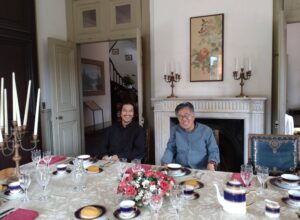
Over the ensuing years, Motoya’s path and mine converged in the cities of Berlin and London when chance intervened anew. Amidst sips of tea, we talked about art, life, and everything in between, each meeting weaving the threads tighter. In the cold winter of 2021, Nagoya (名古屋) welcomed the return of Motoya, the city of his birth and upbringing. Summoned home by the sombre chords of loss following his mother’s passing. I remember one Friday evening, in a corner of a dimly lit, humble izakaya, where our words mingled with the aroma of katsu and the laughter of salarymen. I can still see his eyes, glistening with the weight of emotions, yet guarded by a calmness that seemed to wrap around him like an impervious shield. It was as if the world’s sorrows could knock at the man’s door, but they could never breach the sanctuary of his spirit.
The passage of time brought forth the promise of an interview, initially slated for August 2021. However, life’s intricate dance wove a different rhythm. With the outbreak and unsettling circumstances of the pandemic, it was only in the waning days of December 2023 that I finally got to sit down with Motoya once more in Nagoya. The delay only served to enrich the narrative, it seemed, as both of us armed ourselves with new experiences and new insights gained from separate journeys and the ebb of time.
In the opening part of our conversation below, Motoya shares stories about his younger self, recounting the beginnings of his journey into Butoh dance, and his worldwide experiences, as well as the heartfelt impact of his mother’s passing. Transitioning into the second chapter, our focus turns to Motoya’s roles as both a dancer and a Buddhist. The third chapter delves into Motoya’s collaborations, while in the concluding final chapter, he eloquently expresses his convictions regarding the purpose of art and dance, as well as the inherent purity of human beings.
Into the Wild

AXEL WANG:
In order for us to address the present and the future, I think we must go back to the past. 2005 was the year you first came across Butoh (舞踏). What triggered your interest in the art form?
MOTOYA KONDO:
It was a total coincidence. I was organising a New Year’s Eve event at a temple while I was still in university, about one year before I met my teacher. Out of the blue, one of the co-organisers just said, “Maybe we could invite Kazuo Ohno1”, and I was like, “Who’s that?” I then found out he’s one of the Butoh founders. Unfortunately, one of his associates responded via email and said that he couldn’t participate in the event due to age and everything.
Some time after that, I came across Ohno’s name again, and they were offering workshops and classes, so I felt like checking them out. But yeah, there’s no better way to describe it other than a mere coincidence. I didn’t know anything about Kazuo Ohno, I didn’t know anything about Butoh, and I had never seen any Butoh performance, nothing.

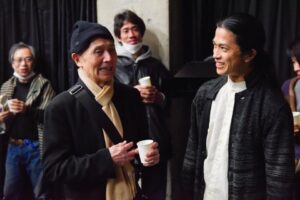
AW: Do you still remember your first Butoh experience?
MK: Well, when I entered the studio for the workshop on the first day, I arrived a little bit late. I remember I saw a video of Kazuo Ohno dancing, and everybody was watching it — I didn’t understand anything at all, once again, and I didn’t feel like “wow” to be honest, but it certainly piqued my interest.
I gradually started training under my teacher Yoshito Ohno2, the son of Kazuo Ohno, and the training was eye-opening and very inspiring for me back then. If I try to verbalise it, that one thing I experienced in his teaching, was a deep connection with Japanese tradition and the history of Japanese art, and simultaneously, it comprised not only Japanese but also the history of Western modern art. Every experience transcended the borders and distinctions between Japan, the East, and the West. Moreover, there was something primordial, something universal, about human existence.
When I was in high school, I spent a year in Portland, USA, and I was a huge hip-hop fan. And later I remember going to Harlem in New York and seeing people doing freestyles and etc. on the street, and it was so cool — the music, the culture — everything in the US just seemed way cooler. Although the Japanese hip-hop scene was quite big in the 90s, the genre is so indisputably rooted in African American history, and what we (Japanese) were doing, was kind of just copying, I thought.
After a while, I also started to get into Australian Aboriginal music. Despite the appreciation and inspiration, I couldn’t ignore the fact that Aboriginal music is closely tied to the Aboriginal people’s daily lives, centred around their existence within their land, hunting and their unique movements and ways of being. In contrast to my own everyday life, this always left a lingering feeling of disconnection in my heart. Having grown up in cities, hunting was, needless to say, not part of my daily life, and the historical context also felt distant. I think in my mind, I was searching for something that would truly resonate with my reality, a connection I couldn’t fully find with either hip-hop or Aboriginal music.
Being in America as a young Japanese kid, that was the first time I genuinely started perceiving Japan from an external perspective. And around the same time, I think my awareness of my Japanese identity also began to form, and I noticed the overarching influences of America on Japanese society — culture, politics, economy — everything. To a certain extent, I felt that we (Japanese) may have lost our connection to our past.
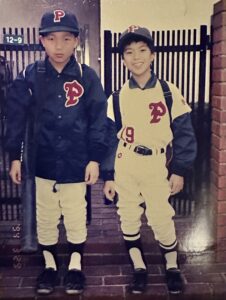
AW: You felt that when you went to America as a high school student?
MK: I started pondering at least, on these kinds of issues. I was just a young boy thinking about what I wanted to do for my future, you know, and I actually thought about becoming a sword maker…
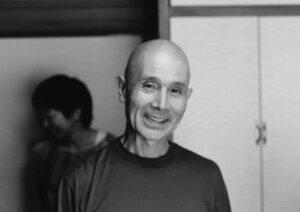
AW: Like a katanakaji (刀鍛冶)?
MK: Yeah (laughs), I was searching for something, you know, like a quest to connect with certain ancient Japanese traditions — perhaps “traditions” isn’t the precise word… maybe it’s the ancient spirituality and cultural heritage of Japan.
Back in my university years, I used to do a lot of purposeless backpacking, just travelling around, and I made friends with people from Israel, Mexico, Italy, India — literally everywhere, and I felt that my mind was expanding to welcome the whole world. I had always enjoyed music, however, be it hip-hop or Aboriginal music, none of them truly spoke to me in the way I described earlier. Until I met Yoshito-sensei, through his teaching, I witnessed some very old Japanese ways of thinking, tea ceremony, flower arrangement, Noh theatre (能 のう)3, the Japanese sense of space, all of it, in tandem with Western art and literature, and furthermore, a quest for universal human truth.
“I was searching for something that would truly resonate with my reality.”
AW: The lessons weren’t exclusively about dance?
MK: Yoshito-sensei often referenced various aspects of traditional Japanese practices, and his ideas were influenced by the rich tapestry of Japanese traditions and art. What made it even more fascinating to me at the time, was that he would talk to us about Salvador Dalí, Picasso, Giacometti and all these great Western artists. So in many aspects, all my struggles, searches, and thoughts found a common ground in his lessons.
As I mentioned earlier, there was something intrinsically primordial in his teaching. All of my thoughts were merging into one place, and I thought, “Wow, this is amazing, I had no idea that something like Butoh existed in my country.”
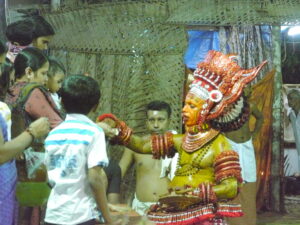
AW: So the journey began. In 2010, you decided to leave Japan to explore other dance forms originating from other parts of the world. Why did you feel it was necessary for you to get out of the country?
MK: I think when I met my teacher, I was so inspired by him, almost like falling in love, you know, and I was so captured by this thing called Butoh. However, bit by bit, as I began to see more performances and workshops, all happening under the name of Butoh, of course many were indeed inspiring, but at the same time, I felt that, the very thing that I was searching for in my heart, I didn’t find it in them, which was the primary reason that prompted my travel afterwards, to see Balinese dance, Flamenco, Tibetan Buddhism4 and so on.
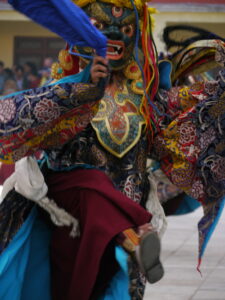
After several years of training under Yoshito-sensei, I sensed that nearly all of my ideas about dance, about life, were influenced by his teachings. While he’s a great teacher and a hugely influential figure who set my path and guided me, I gradually came to realise the need to further conduct my own research into dance and life, and to develop my own approach.
Considering the dance pioneers like Tatsumi Hijikata5, Kazuo Ohno and Yoshito Ohno, each created a different dance, something of their own. They served as incredible sources of inspiration, and their works affected me significantly, and I hold deep admiration for them, but I did feel compelled to further explore my own dance and the reality of existence. The most important question was not “What is Butoh?” but “What is the truth of existence?”


AW: The last time we met here in Nagoya in 2021, when you came back for your mother’s funeral, and you were telling me about her passing, even though you seemed extremely calm, but I can imagine it must be one of the hardest things for anyone to endure.
MK: Definitely, that was one of the most emotionally intense events, facing my mother’s passing. The pain wasn’t only about her departure, but to see her in so much pain and suffering before she eventually passed away, that was more painful than anything else.
After my mother’s passing, her body returned home and remained in the house for three days. I found myself sleeping on this sofa, while my mother was lying right over there, so during that period, I would often catch sight of her face, and she looked so peaceful, so beautifully calm and serene, and that sort of enveloped me in a feeling of peace as well.
Losing my grandmother some years ago, with whom I shared a strong connection, and then my mother… confronting the deaths of loved ones has always been an empowering experience for me. Rather than leaving me in a devastating state, it instilled a profound sense of enrichment within me. Of course, it was extremely sad, but in many ways, it granted me newfound strength and kindled an immense sentiment of gratitude for the gifts they had bestowed upon me while they were alive.
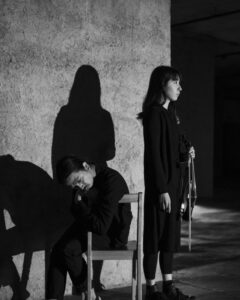
AW: Death is not something we often talk about in the world we live in today. I appreciate you opening up about the subject.
MK: To say that I felt motivated and stronger inside would perhaps be an accurate description. Following my mother’s passing, upon returning to Europe, I immediately started working again. Contemplating and confronting death redirects my mindset, not only in my work but also in everyday life. This introspection made me think about my own death, I think about it almost every morning.
The loss of both my grandmother and mother… my feeling was more like, okay, now I must fully embrace living my own life, since it’s not going to last forever, and it’s going to end one day. As an artist, occasionally, unnecessary ambition may creep in, say when you hear a compliment, I too, might desire becoming a successful artist, being admired and all that. When my mind drifts to those so-called “wrong” or “twisted” places, however, contemplating my own death realigns my perspective. It puts my mind back in the right place, so to speak. Almost like a reminder, that these aspirations hold little significance in the face of mortality, none of them is going to help when I die. What matters ultimately, is the extent to which we share and give to others.
I created a performance inspired by my mother’s death, transforming the ordeal of pain and grief from losing loved ones into creative energy — Lifelines (2022) is the name of the work, and I’m going to perform it soon here in Nagoya with Hoshiko Yamane6.
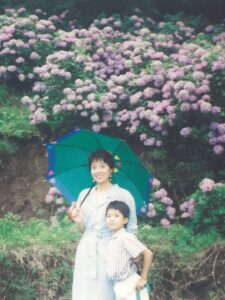
AW: You posted a lovely picture of you and your mother together on Instagram, where you wrote about the spiritual condition that you started to witness blossoming between you and your father. “Through the death of my mother, something new was born between me and my father”, I thought that was beautiful. What was your relationship like before with your father?
MK: I mean, we were good… there were some difficult periods, especially after I chose the path of dance… But before that, I always remember him being a good father, and there was never any bad memory, though he did work a lot so we didn’t have that many opportunities to connect, so to speak.
After I chose the path of dance, however, there were indeed moments of conflict — not only with my father, but with my mother, sister, everyone around me was becoming difficult, basically, no one liked my decision. But looking back, they were probably just worried and tried to look out for me simply.
Either way, it’s not because my mother passed, my father and I finally resolved the conflicts… I’m sure that for my father to lose his wife was exceedingly painful too. As a son, I tried to express my love and care for my father, and I think he felt that, and in turn, our relationship and bond have likely grown deeper and stronger, especially now that we have more time to simply be the two of us.
Footnotes
1. Kazuo Ohno (大野一雄, 1906–2010) was a pioneering Japanese dancer and choreographer, co-founder of the Butoh dance form, known for its avant-garde and expressive movements. Renowned for exploring vulnerability and the human condition, Ohno's work has had a profound impact on contemporary dance.
2. Yoshito Ohno (大野慶人, 1938–2020) was a prominent Butoh dancer and teacher, following in the footsteps of his father, Kazuo Ohno. Yoshito dedicated his life to the development and promotion of Butoh.
3. Noh Theatre (能 / のう) is a traditional Japanese performing art with roots dating back to the 14th century. It features a unique blend of music, dance, and drama, often performed with masked actors, conveying both spiritual and historical narratives.
4. Tibetan Buddhism is one of the two major streams of the Sanskrit traditions of Buddha’s teachings, which encompasses the fundamental teaching, as well as Mahayana and Vajrayana, and preserves a vast range of philosophical views as well as a wide variety of different practices. Different schools of Tibetan Buddhism all emphasise the importance of two aspects, wisdom and loving-compassion, and realising the innately pure nature of the mind.
5. Tatsumi Hijikata (土方巽, 1928–1986) was a pioneering Japanese choreographer and dancer, credited as one of the founders of Butoh, an avant-garde dance form that emerged in post-war Japan. Renowned for his radical and transformative approach to movement, Hijikata’s influence extended globally, leaving an indelible mark on the world of contemporary dance.
6. Hoshiko Yamane (山根星子) is a Japanese violinist and composer based in Berlin, known for her membership in Tangerine Dream since 2011. Trained initially in classical violin, her versatile career also involves collaborations and contributions to various musical and dance productions in the Berlin creative scene.
Credits
Editor: Axel Wang
Photography: Courtesy of Motoya Kondo, unless otherwise stated.