
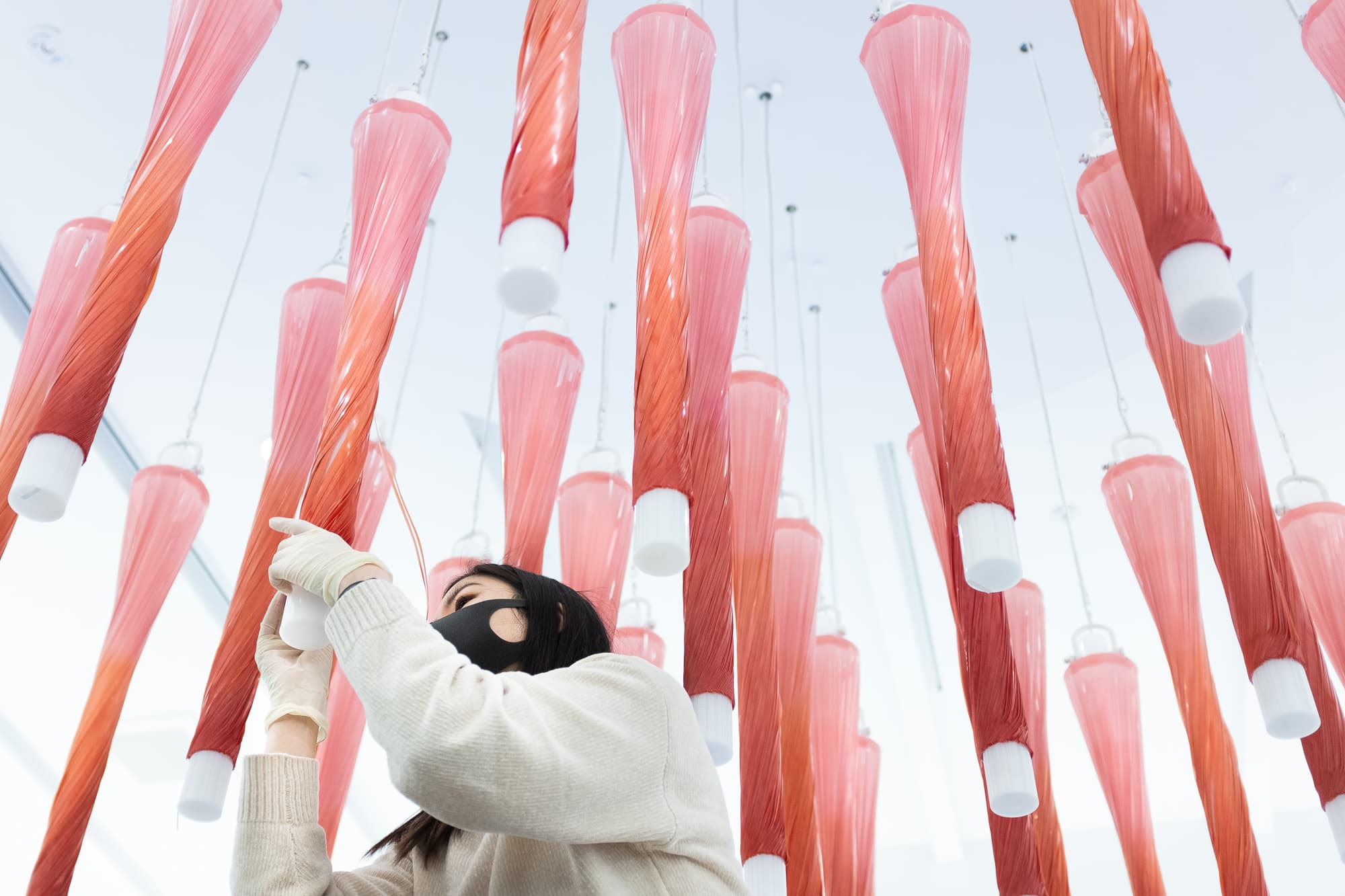
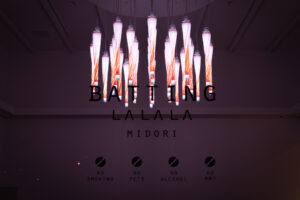
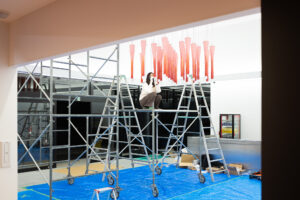
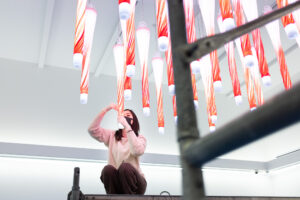
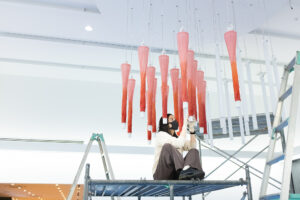
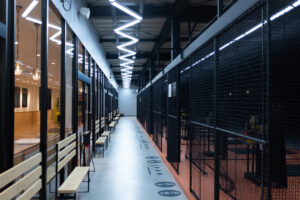
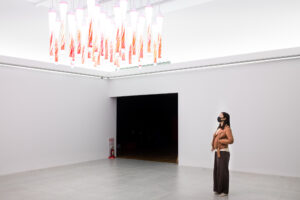
Upon the completion of her light installation work, neuro−muscular interaction (神経−筋 機能) at Batting LALALA Midori (バッティングららら), as the producer of the project GROWING SPACE, SYNONYM spoke with Riko Yasumiya (安宮理子), the invited artist, about her background and experience, as well as aspects of the project itself.
AXEL WANG:
Riko, let’s start with where you are based now. I love Tōkyō (東京), every time I go, I always enjoy it, but I suppose living there is a completely different story. The last time we spoke, you expressed some slight distaste for residing in the city. Can you tell us why?
RIKO YASUMIYA:
It’s just too complicated. There’s this constant flow of information accelerating the pace of a society that’s already moving too fast. It’s almost become a custom, a norm for everyone to chase after this trend of constant fluctuation. Some people try really hard to apply themselves to the trends, and I guess that creates a kind of disparity between me and the masses. It’s exhausting, really, and I sometimes feel a little bit alienated.
I’m sure there are others who feel the same way. Society is hugely diverse, and it’s not lacking in great personalities who express themselves, in fashion, for instance. On the other hand, because so much is happening all the time, expectably, there are more opportunities and excitement.
AW: How would you describe your experience living overseas compared with Japan?
RY: When I’m in Japan, I’m Japanese, when I moved overseas, I naturally fell into the category of a foreigner. Even within a micro-environment like a school let’s say, I still belonged to that group of foreigners, despite there being many immigrants in London. I remember feeling quite desperate trying to figure out how to be recognised as an artist, and more importantly, as an individual, instead of being seen as just another foreign students who go overseas and sightsees.
The schools themselves felt very different too. In Japan, it’s more about the craft, you pay more attention to skills and techniques, whereas in the UK, the work is evaluated more on the basis of concept and presentation. It’s the same art, but from a different perspective, and I think that was extremely valuable for me to learn.
AW: Rewinding the clock a little bit, you moved from studying graphic design in Kyōto (京都), to art and science in London. Was there any trigger behind this switch of field?
RY: Allow me to clarify, while I was in Kyōto my major was digital design. So, beyond graphics, the course also covered game design, illustration, video animation, and so on, using a variety of digital creation tools. The department emphasised learning different techniques and wasn’t about graphic design alone specifically.
My interest in creating mixed media works, utilising both digital and analogue methods, started to develop back then. I used to produce human anatomy-related work quite early in university. At the time, I couldn’t afford a 3D model, and there weren’t really any apps available either. The one thing I could do was flip through anatomy books, gradually building a virtual model in my head and comparing it with the illustrations in the books, in order to understand the human body better. As I progressed, I realised I needed to learn from experts and professionals, which led me to pursue further study in an interdisciplinary course related to art and science.
AW: Further comparing the differences, how do you think your art is perceived by the public or the professionals in the two places?
RY: I would like to think my work is perceived positively both in Japan and overseas. I guess if people find it interesting, that’s more than enough for me, who they are isn’t really my concern.
In London, you tend to encounter artworks or crafts almost everywhere, it’s just part of everyday life. On the other hand, in Japan, these works are predominantly exhibited in art museums or galleries, so people have fewer opportunities to engage with them, to feel, touch, or to experience artwork outside of those establishments.
Also, many people still associate art with traditional fine art, like painting. Since my work is often mixed media, the public may not always recognise it as “art,” or they might mistake it for something else, which can be a bit frustrating.
AW: I think many of us consider art and medicine to be separate. How do you see their relationship?
RY: Both medicine and art originated from philosophy in ancient times. As time went by, they evolved in their own ways, branching out and eventually acquiring their own identities and names1. I think every field exists because human beings are always driven by curiosity and a desire to discover, even though medicine and art are largely considered separate today, as you mentioned, the boundary between them was still fairly ambiguous around the 13th century. It wasn’t until the 16th century that the two fields really emerged as independent disciplines. Many significant historical figures, Leonardo da Vinci, for example, were anatomists, engineers, as well as artists.
With the invention of photography in the 19th century, there was practically no need for realistic illustration in medicine anymore. Instead, medical imaging science began to take over the role that art once played, especially as technology advanced. Historically, I think art and medicine started to diverge because of their different natures, artists tend to seek expression, whereas medicine is grounded in precision and accuracy.
Nonetheless, in the past, one way or another, they have always collaborated and contributed to each other’s development. Medical research and findings were illustrated by artists, so they could be better understood when published. And as medicine advanced, artistic representations also became more refined and convincing. I find this kind of cross-disciplinary collaboration highly intriguing.
As an artist, I feel that my role is to help ease communication between doctors and patients through my work. Medicine has become much more transparent today, with fewer mysteries surrounding it. But throughout the course of history, even as we’ve made progress in curing diseases, the communication barrier between medical workers and patients has always existed, and probably always will, because pain and suffering are inherently subjective, so this would probably be an eternal challenge for me.
On top of it all, in order to convey the symptoms accurately, the right words and knowledge are required from both ends. I don’t think this is simply a matter of formal education; even if it’s taught in school, people tend to overlook it if they’re not interested. I believe curiosity is really the root of our hunger for knowledge. The human body fascinates me, and I want to share that fascination through my work. Maybe, after experiencing it, someone might become just a little more interested in biology or medicine—even in a small way.
AW: Touching on the topic of healthcare, there have been previous cases where art is prescribed to patients, almost like a form of medication or therapy. Obviously, this is going to be circumstantial, but how do you think art in general can function in that way?
RY: Jill Sonke presented a talk about why medicine needs art2 back in 2015, where she talked about the relationship between creative expression and healthcare, particularly for patients with mental illness, so it’s definitely something that’s being actively discussed in the field.
I haven’t really thought much about it, since it’s not the central focus of my work, but art therapy is already an established practice, and I do feel that clinical psychology is gradually moving ever so close to the world of art, in a sense that, I know this may sound a little bit obscure, but I believe our inner body is able to respond to, or pick up, certain wavelenghts or signals produced by the visual or auditory elements of an artwork, along with other external factors. Depending on the piece, it can have a calming effect, almost like bringing a sense of peace of mind.
AW: Being born and raised in Japan, how do you think your characters are shaped by Japanese culture? Are there any particular Japanese artists? Or others who have influenced you?
RY: In terms of how I realise my work, I think I’m definitely influenced by a minimalistic design approach, as well as the Japanese attention to detail and emphasis on craft, and the idea that work has to be meticulous and precise. My family was also a huge influence, both my aunt and uncle worked in the medical field, I think that’s how my interest in medicine developed in the first place.
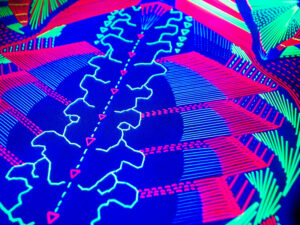
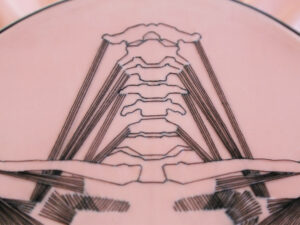
I honestly don’t think there’s any way to separate myself from Japanese art and culture. The likes of Manga, for example, have had a huge impact on mem, especially the visual aspects of Evangelion (新世紀エヴァンゲリオン) and Attack on Titan (AOT) (進撃の巨人), in terms of how human anatomy and works of art are brought together. At some point, I was certain that these exceptional manga artists were not only illustrators, but also anatomists, like Da Vinci. Without discovering their works, I probably wouldn’t have acquired this wealth of knowledge and understanding of human anatomy, since illustration alone has its limits when it comes to portrayal and expression.
Say in Evangelion, muscle fibres are kind of growing out of gigantic industrial, robotic structures, joining together to form a larger system. Whereas in AOT, you see various human tissues like muscle fibres, organs, skin, and all the flesh connecting to bones to construct a redesigned human form. You obviously don’t come across these types of physicality and body movements in the real world, but they sparked me to think how, even though the human body is often seen as a universal and unified theme, there are countless layers and dimensions to how it can be represented.
Other great artists like Ryoji Ikeda (池田亮司), Bridget Riley, Man Ray, and many profound writers who contributed to the study of anatomy from the 16th to the 19th century, like Andreas Vesalius, who wrote De humani corporis fabrica libri septem and Jean-Baptiste Marc Bourgery, the author of Atlas of Human Anatomy and Surgery, I’ve found all of them deeply inspirational — even Grey’s Anatomy, in its own way.
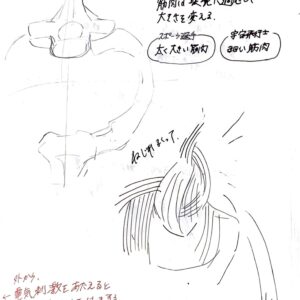
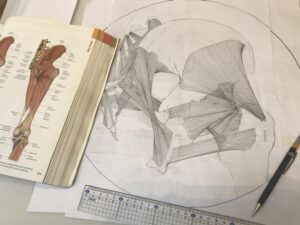
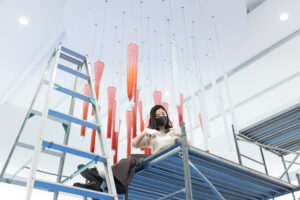
AW: This project at LALALA is your first commissioned project after graduation. I imagine it can be quite overwhelming, especially surrounded by literally all men working on site. How would you describe the overall working experience?
RY: Speaking from experience, installing artwork often involves a lot of carpentry, machinery, tools, and heavy lifting, so it just happened that only male contractors were on site that day. Everyone involved was a specialist and a professional, so gender wasn’t really an issue for me.
If I’m honest, yes — it was a lot to take in for my first commissioned project, though I would say it didn’t drift too far off from what I have always been doing, which is thinking about how to realise and present my work.
There were also many other tasks that I had to worry about, so it wasn’t just about making the artwork, which was, of course, my main responsibility, so I genuinely appreciate everyone’s effort in helping bring the project to life.
AW: Thank you for your time, Riko. One last thing before we go, how have you been affected by the global pandemic?
RY: Definitely, all plans had to be adjusted. I’d be lying if I said I didn’t have concerns about the production and presentation of my work. From the beginning, I’ve always wanted to create work with an interactive element, but the pandemic has made that very difficult.
I talk about this a lot with fellow artists, trying to figure out the best possible ways to present our work. There’s been a lot of back and forth, but I think it’s something we all have to reconsider given the circumstances.
At the end of the day, however, I do believe that works of art have to be experienced in a space that you don’t normally come across on a daily basis, somewhere real and tangible, where you can relax completely, concentrate and immerse, so to speak. Hopefully, things will return to normal sooner rather than later!
Footnotes
1. Human Anatomy: Depicting the Body from the Renaissance to Today (2006), by Benjamin A. Rifkin, Michael J. Ackerman and Judith Folkenberg.
2. For the TED talk, please visit the link here.
Credits
Editor: Axel Wang
Photography: SYNONYM, contributed by MUGA and Riko Yasumiya