
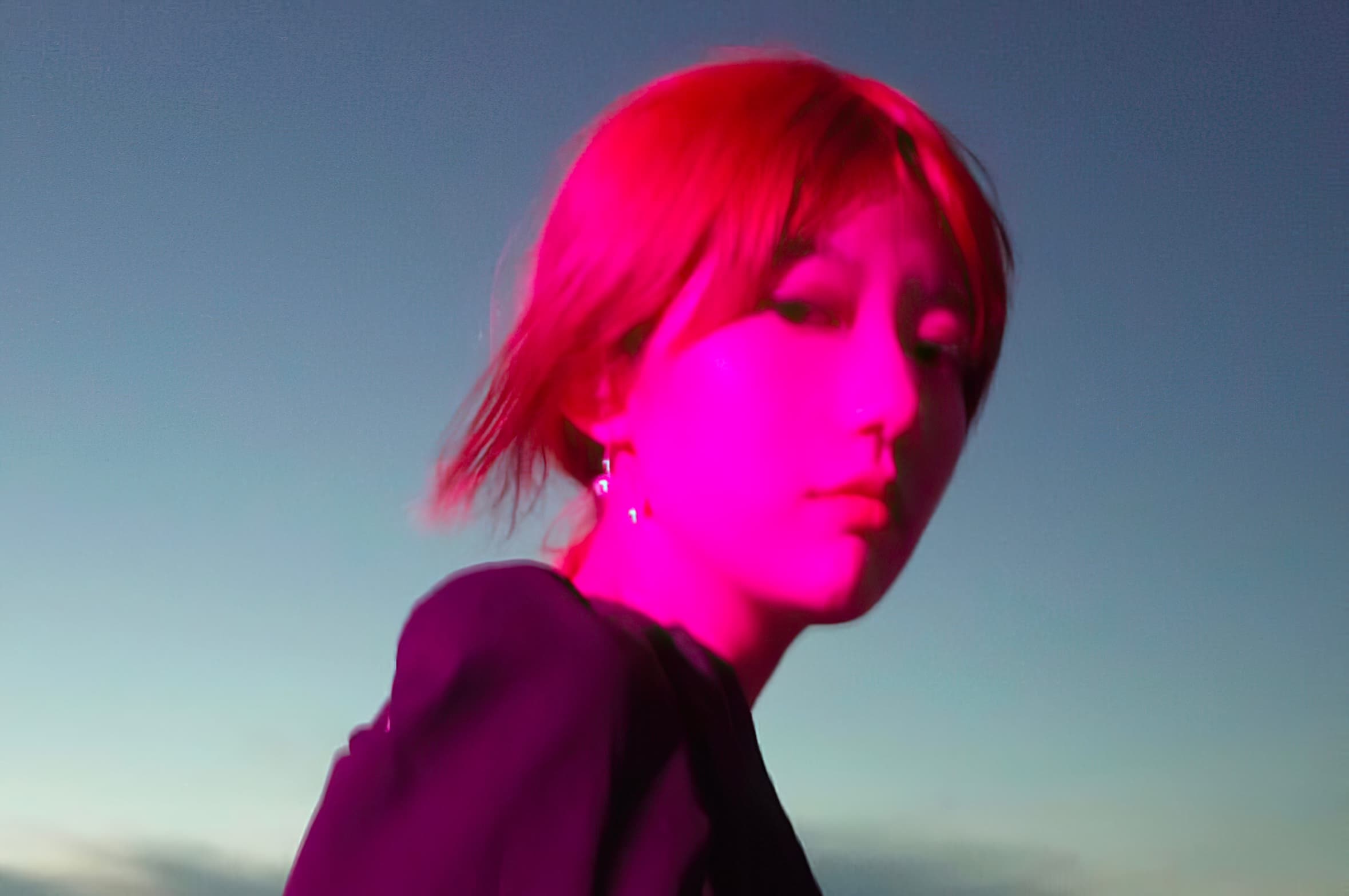
We conducted an interview with Shinka Qinhua Yang, a Shanghai-based multimedia digital artist who holds a PhD from Tama Art University in Tokyo.
Using various digital methods, Shinka creates works that probe the fictitiousness of reality, focusing on the calculation, generation, and arrangement of immense artificial constructs within the context of consumerism. In recent years, her practice has gravitated towards questions surrounding image production, labour consumption, and women’s identity within the intertwined systems of artificial intelligence and neoliberal economics.
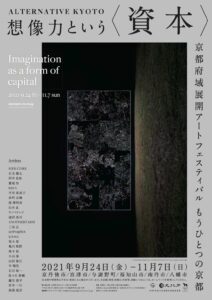
Since the third edition of Alternative Kyoto in 2021, I have been keeping an eye on what Shinka does. Bizarre, intriguingly strange, so utterly, “now”, for lack of a better word, that it wonderfully captures the zeitgeist of our era. Half of the time, digital works these days just, don’t, seem to work, at least to my bare eyes — possibly due to a lack of reference points, whatever — they can arrive over-rendered, like visually over-caffeinated BS on steroids, even though dressed up with some half-baked concept, or a narrative engineered to compensate for the fact that the work itself says almost fuck all.
They are mostly banal, so blasé, so prosaic, desperate to signal intelligence, urgency, futurity, anything at all, and yet, you stand in front of them, you smell no romance, no danger, no mystery, just the faint exhaustion of having looked at something pretentiously “relevant”. I can continue to sit here and swing my bat against the new wave of prompt or generative-image or screensaver spectacle and Silicon Valley artist-wannabe tech nerds, but perhaps next time.
Although Shinka’s work embodies that very sense of nowness with a post-internet Y2K-infected aesthetic, and undeniably aligns with the broader East Asian digital and media art landscape, culturally and emotionally, it never feels globally generic. The technical aspects of her work feel less like a showcase of prowess — they are more like symptoms, of a wider social pathology embedded within normalised culture and conditions of contemporary life. She approaches these symptoms by diagnosing and dissecting the structures that produce these symptoms rather than merely exposing them. There are no hyper-stimulating visuals or overt techno-dystopian critiques competing for your attention. Instead, they are only fragmented archives and speculative memories, radiating a vacant and muted, still atmosphere, almost like that uncanny feeling of crouching alone and browsing the web past midnight. She invites onlookers to walk across the emotional residue left behind by these conditions, tapping directly into a contemporary anxiety that many digital artists only circle awkwardly around from a distance. And that fascinates me.
In early 2023, following an open call from a Tokyo museum, I took the plunge and reached out to Shinka about a potential collaboration. The project itself never materialised (fair play by the museum), but over several online conversations, I would say something meaningful was established, if nothing else. There was one particular moment during our exchange that I found, to say it was interesting, would be a bit of an understatement. When I asked her about the essence of her art, she answered: “I would like to become a robot.”
Good ol’ Shinka.
To say that it was one of the strangest responses to one of the most templated art interview questions would be another understatement, though, in retrospect, not an entirely baffling one.
Tracing back to the beginning of our interview, Shinka had mentioned feeling a profound void within herself, having grown up in Shanghai during the turbulence of the 1990s amid a period of rapid, almost violent, and near-total urban transformation. As vast sections of Shanghai disappeared, parts of her seemed to disappear with them. Beyond the repetitive routines and confines of home and school, her recollections of much of the city and of her own past remain strangely elusive, like a hard drive being endlessly reformatted and overwritten, leaving her with a fragmented construction of personal history. Even though nostalgia strikes a chord, it is merely a cluster of hollow static, never a poignant melody. Unmoored from both place and memory, this insularity firmly anchored her practice in the present, urging her to confront and focus on the relentless condition of “now”. “I would like to become a robot”, it had probably not really been about technology after all. If memory and experience had become unreliable ways of understanding the world around her, I guess the machine’s way of constructing reality offered another.
Yet after finishing her studies in Japan and returning to Shanghai, Shinka told me that she has grown increasingly aware of and sensitive to, and touched by, the emotion of nostalgia, alongside what she described, with a hint of lightheartedness, as a more genuine “humanistic concern”.
Perhaps it was the reacquaintance with her homeland after being away for so long, or perhaps it was the sheer advancement of human technology and the acceleration and explosion of “the now” in contemporary life — you know the list of culprits — that, paradoxically, rebooted a kindling and awakening in her, forcing a renewed confrontation with her own memories and cultural background.
This trajectory is somewhat reminiscent of fantasy or sci-fi films like Air Doll or Poor Things, where a robot-like being is initially introduced into the world, devoid of memories, emotionally vacant, stripped of sensations. Yet, as she navigates life, observing the world through her pair of mechanical silver eyes, she experiences and suffers, she grows and learns. Over time, she begins to evolve, developing emotions, sympathy, and empathy for others and her surroundings — much like an actual human being. The difference, of course, in this case, is that Shinka is far, far removed from being an android.
“The past is never dead. It’s not even past,” William Faulkner once wrote. The past never politely leaves itself in the past, it ruthlessly seeps and continues to exert itself upon the present, silently spoiling the future in ways we seldom recognise. Is it haunting her practice? I’m not sure. Even though Shinka appears relentlessly propelled towards the future, towards crazier technology and mind-boggling artificiality, there ironically remains an unresolved absence trailing behind it, and this lingering absence of her past silently permeates like an emotional undercurrent. Beneath all the digital surfaces and conceptual architecture of her work, there’s something unequivocally human pushing through, and I, for one, will be curious to see how the present — which will one day eventually become the past — and all those accumulated traces, manifest within her in the years to come.
The Girl with the Silver Eye
AXEL WANG:
非常感谢喘儿能抽出时间进行这次谈话。原本是想趁着你去年秋天来京都的时候,或是年末来热海准备项目时可以跟你进行面谈,最终没有去成,还是得Zoom。另外,我必须承认在你的这个艺术门类跟科技领域,很多东西我都不太了解。像我读你的论文或访谈时,很多词汇都非常陌生,每个字都能明白,但当拼在一起的时候我就得想一想,你究竟说的是什么。
First of all, Shinka, thank you for taking the time to do this interview with us. I had hoped to have a face-to-face chat when you were in Kyoto last autumn, or while you were preparing for the Atami project at the end of last year. Unfortunately, neither could work out, so I suppose Zoom it is. Also, I have to admit that, when it comes to your field of art and the world of tech, like when I was reading your past interviews and essays, many of the terminologies were just way over my head! I just had to pause and try to figure out exactly what you were trying to say.
SHINKA YANG:
这可能是我的问题(笑)。
That’s probably down to me. (laughs)
AW:今年有什么工作安排吗?
Any work planned for this year?
SY: 去年下半年的展览频次有点太高了,导致整个人的身体和创作状态都不是太好。所以今年可能想花时间好好沉淀一下,以及不得不开始去完成一些拖延很久的学术工作。今年年底可能会出版一本书,关于人工智能与当代艺术实践,这会占据我今年主要的时间。除此之外还有一些零星的展览计划,但不会安排太多。
There were perhaps a few too many exhibitions during the second half of last year, and it felt rather draining — both physically and creatively. So this year, I’m probably going to take some time to just sit down and digest everything properly, and to work on some academic projects that I’ve put off for some time. I’m hoping to publish a book by the end of the year, mainly focused on AI and contemporary art practices, which will probably take up most of my time. Apart from that, there are some exhibition plans here and there, but nothing too excessive.
AW:你是正儿八经上海出生长大的吗?
Were you born and raised in Shanghai?
SY:对。
Yes.
AW:对于小时候的生长环境,有什么细节是特别有印象的吗?
Thinking back to your childhood environment, are there any specific details that left a strong impression?
SY:可能更多还是家庭成员之间内部的细节,爸爸妈妈工作比较忙,大部分的时间会把我一个人放在家里,所以对于外界环境会有一种类似真空的感觉。
It’s probably more the dynamics within the family, rather than anything external. With my parents preoccupied with work, I spent a lot of time alone at home. This solitude apparently fostered a sort of, void-like feeling within me toward the world outside.


AW:你在上海大学电影学院毕业,当时的主修是编导?
You graduated from the Shanghai Film Academy, and majored in screenwriting and directing, right?
SY:全名是广播电视编导。我们的专业内容可能更偏向电影研究和微电影的制作。
The course, titled “Radio and Television Scriptwriting and Directing”, focused more on film studies and research, and short film production.
AW:在我的成长过程中,包括我身边的人,好像没听过谁考虑选择艺术、设计或电影相关的专业。通常都是说要当科学家嘛,要不就是去银行,或当律师、医生之类的。直到我上大学的时候,得知一个初中同学去了温哥华一所叫Emily Carr的学校念设计相关的本科,突然才觉得说:“喔,原来这也是一个选项。” 不知道当时你选择了编导这个大学专业,是有受到什么家人影响吗?
In my upbringing, neither I nor the people around me ever really considered studying art, design, or film. The typical paths were becoming scientists, working at banks, or pursuing careers as lawyers, doctors or you-know-what. It wasn’t until I started university that I heard a former middle school classmate had attended Emily Carr, a design school in Vancouver, and then I thought, “Oh, I didn’t know that was an option.” When you chose film as your major, were you influenced by your family in any way?
SY:这其实是个挺随机又挺命运安排的人生走向。我的父母其实就是刚刚你说的,科学家,他们本身对艺术并没有任何的概念或兴趣。高中的时候上海很流行Lomo相机,我就开始对摄影产生了兴趣,但也没有说想要往艺术方面发展,填报志愿时选的都是文学或者新闻类的专业。
结果最后想去的学校没考上,去了上海大学,而巧合的是上海大学第一年是不分专业的,第二年选专业时文科生也可以选编导专业,我就想着尝试一下。在之后的学习过程中,就发现自己确实还是喜欢影像创作,做的也还不错。但同时又觉得非常不满足,包括大环境以及周遭的同学,觉的他们拍的都好差(笑)。所以那时候就决定了以后一定去一所专门学艺术的学校继续深造。
It’s actually a curious concoction of randomness and fate. My parents fit the mould of what you just described — scientists — with little interest in, or understanding of art. I remember getting into photography during high school, around the time Lomo cameras were very trendy in Shanghai. But even then, it was more of a hobby, the idea of pursuing art or becoming a professional artist never quite crossed my mind.
By coincidence, I eventually found myself studying film at Shanghai University — a kind of “why not” decision. But then, the more I worked with moving images and visual storytelling, the more I realised I genuinely enjoyed it, and that I was actually quite good at it. Yet alongside this newfound enthusiasm came an equally strong sense of dissatisfaction. The general academic environment, as well as much of the work produced by my peers, left a lot to be desired. To be honest, I just thought most of it was pretty terrible. (laughs) That was probably when I first began seriously considering the prospect of pursuing further education at a specialised art school.
AW:来日本是有受到像Gutai这类艺术运动的影响吗?
Would you say that your later decision to study in Japan was influenced by art movements like Gutai1?
SY:像这一类的系统知识我可能是到日本之后才了解到的。我去日本前其实还没有接触过当代艺术的教育,更多还是影像和电影。
我大学毕业论文的研究方向是日本战后前卫艺术,主要是寺山修司,这大概是我人生第一个转折点,在此之前我对欧美的文学电影了解的更多一点,甚至连日本动漫动画片我都很少看。因为寺山修司我才对日本文化第一次产生兴趣。
第二个转折点是我大四下半年曾在上海的OCAT短暂实习过。OCAT是一家比较专注于影像艺术的当代艺术中心,我在那里了解到比较多的影像艺术作品,其中也有很多日本的影像艺术家,包括久保田成子等。这份实习之后,才算是开始坚定地追求当代艺术方向的学习。
It wasn’t until I arrived in Japan that I formally began to study contemporary art and its history. Before that, my background was much more rooted in film and visual imagery.
My undergraduate thesis revolved around post-war Japanese avant-garde art — namely artists like Shuji Terayama2 — and this marked a significant turning point in my life. Before the thesis, my studies leaned more towards European and American literature and cinema — I barely watched any Japanese anime or manga, even. It was through the works of Terayama that I first developed an interest in Japanese culture.
The second pivotal moment came during the latter half of my final year in university, when I briefly interned at OCAT in Shanghai. OCAT is a contemporary art institution that focuses largely on media art, where I had the opportunity to explore and become acquainted with the works of many media artists, including Japanese artists like Shigeko Kubota3. It was after this internship that I became determined to pursue studies in the direction of contemporary art.
AW:2022年在多摩博士毕业后有什么特别的原因让你决定离开日本,回到上海的嘛?
Any reasons that prompted your return to Shanghai after earning a doctorate from Tama University in Tokyo?
SY:我自己本身可能也不是特别满足于单纯做一个艺术家,会希望我的身份更多元一些 — 生活以及工作,能够有很多段落组成。对现阶段的我,可能在国内能实现的事情会多一些。所以想先回来多一些体验,转换一 下生活,之后再考虑还要不要去其他地方。
On a personal level, I’ve come to realise that simply identifying as an artist doesn’t feel entirely fulfilling. I’m increasingly drawn to a more, multifaceted way of living and working, one that extends further art alone. At this stage of my life, it appears that there are more opportunities and possibilities for me to explore within my home country. So I wanted to return to Shanghai first, to experience more and to live a slightly different lifestyle for a while, before considering what might come next elsewhere.


AW:在日本生活了8年后回到上海,若让你做一个横向对比的话,两个地方有给你带来怎样的差异感吗?
After spending 8 years in Japan and going back to Shanghai, can you share how these two places compare?
SY:我是一个相当封闭,并自我的人。所以在哪里生活,说老实话对当下的自己来说其实都差不多。不过我最近翻照片的时候发现一个很有意思的差距,就是在上海拍的照片,物和人会很多,但在日本拍的风景和街景比较多。
我觉得上海对我来说就是一处全是由细节组成的地方,我也是所有细节中的某一个细节。日本则更像是一个环境,一个容器的外壳,我可以选择进入和不进入,这种可选择的疏离感还挺舒服的。
I’m actually a very self-secluded and self-contained person. If I’m completely honest, at the moment, I feel fairly indifferent about where I live. With that being said, I noticed something interesting lately while I was digging through some old photographs — those taken in Shanghai were mostly objects and portraits of people, whereas I photographed more landscapes and street scenes in Japan.
I perceive Shanghai as a city composed of countless details, where I, too, exist as one small part among many. Japan, by contrast, feels more like a complete environment in itself — almost like the shell of a container that I can choose to enter, or not. I found that sense of optional alienation strangely comforting.
AW:回到工作方面,你之前在其他访问中也提到在日本时的“个人化”跟“疏离感”,整个创作环境相对来说舒服一点。不知道你现在回到国内之后,整个大环境有没有对你的创作产生一些直接,或正面或负面的影响?
Coming back to your work, you previously talked about the overall creative environment being more relaxed and feeling more at ease in Japan, describing your times using words like “personalised” and “alienated”. Now that you’re back home, has the whole vibe there had any direct impact on your work, either in a positive way or a not-so-positive way?
SY:影响肯定是有的。这里就只说一些正面的吧(笑)。我自己的一个感觉是我的作品变得比以前更“通俗”了,会想让大家都看得懂。以前感觉更多重视在自我表达和对于一些技术议题的实验性探索,不太在乎观众的感受。这可能和两个国家观众的包容度有关系。
There’s definitely been an impact, though, for now, let’s keep on the positive side. (laughs) From my perspective, I’ve noticed a distinctive shift in my practice. My work has become more “accessible” than before, in the sense that it’s speaks more readily to a broader audience, I want people to actually understand it.
When I was in Japan, I was much more invested in self-expression and technical experimentation, with little concern for audience perception. I think this may partly have to do with differences in audience tolerance and expectations, and cultural attitudes toward art in the two countries.
AW:在英文的表达里有个说法叫”elevator sentence”,大概指的是在与别人共乘电梯这一段很短的时间内,提出描述一个简明扼要的句子或表达。当被问到你的艺术作品是关于什么的时候,你会如何用一句elevator sentence表达呢?
In English, there’s a term called an “elevator sentence”. It’s about delivering a brief and concise statement about the theme and idea of your work during a short elevator ride. If someone were to ask about the essence of your art, how would you encapsulate it in an elevator sentence?
SY:我想成为机器人(笑),算吗?有一回我跟一位朋友在聊天时,他提到说我所有的作品都是以机器的⻆度在看事情,我的人性反而在作品里没有过多的体现。本来我也没太多这方面的想法,听别人这么一说,好像确实是这样。
I once joked about wanting to become a robot — does that count? (laughs) Once, while chatting with a friend, he pointed out that much of my work seems to have adopted the perspective of machines, with very little sense of human subjectivity present within it. I never thought of that before, but once he said it, I realised he was probably right.
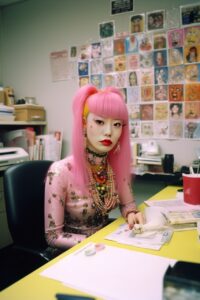
AW:你曾说“现实本身就是虚拟的”,我对这句话挺感兴趣。首先我觉得我们得给俩词下个定义,当你说“现实”,是指reality,线下(offline);“虚拟”则是virtual reality,线上(online),对吗?
In paraphrase, you mentioned that reality itself is virtual. I’m very intrigued by the statement, but let’s define the two terms first and foremost. When you said “reality”, you meant like offline, and “virtual” refers to virtual reality — conversely, the online world, does that sound about right?
SY:我们换种说法嘛,本来这句话,它可能更像是一个文字游戏。用中文的话,virtual reality就是虚拟现实,VR也是所谓的数字品专业非常重要的一个部分,我其实就是把这个颠倒了一下,原话的意思是不要再搞虚拟现实了,现实本身就是虚拟。那么这个现实性跟虚拟性,它可以从很多不同的⻆度去拆分这两个词。现实是reality,虚拟既可以是virtual — 词源的原意,同时也可以被理解成:看不见的。
刚讲说我想成为一个机器人,我的作品很大一部分是试图去展现机器的视⻆,机器是怎么去看待这个世界的,我一直对机器的视觉逻辑和它的运转系统感兴趣。
我们现在生活中的各种现实空间,它存在着很多看不见的东西,这些东西指代一些,比方说后台的程序,或者系统之间的操作,还有数据上的操作,它们都是不可见的。同时呢,也能指代在这些所谓的数据,所谓的操作,背后还有一套像是政治系统也好,权力系统也好,这类隐形的东西,它决定了我们现实的形态,那么再反过来讲,现实其实就是虚拟的,我说明白了吗(笑)?
Let me rephrase it. The statement was more like wordplay originally. In Chinese, “virtual reality” is literally translated as “虚拟现实 (xūnǐ xiànshí)”, and VR nowadays is obviously a crucial part of the digital product industry. I effectively reversed “virtual (虚拟)” and “reality (现实)”, suggesting that it’s about time that we all stop obsessing over virtual reality because reality (现实) itself is virtual (虚拟).
The very idea of “reality” and “virtuality” can be dissected from multiple perspectives. This tangible surrounding of ours represents reality, while “virtual” in its etymological sense denotes representation, simulation, or imitation, it may also refer to the unseen aspects invisible to our naked eye.
Earlier, I mentioned wanting to become a robot, and much of my work indeed attempts to showcase the viewpoints of machines — how they perceive the world. I’ve long been fascinated by the visual logic and operational systems of machines.
In the realities we inhabit, numerous imperceptible or invisible components and structures are constantly at work, like programs running on backends, inter-system operations, data and algorithmic processes and so on — they all remain hidden from plain sight. Beyond that, invisible political systems and power structures operate behind those data systems and operations, quietly shaping the reality we experience. Thus, in a way, reality itself is virtual. Did that make any sense? (laughs)
AW:我得回头再听一下录音(笑)。
接下来想问问关于游戏。大家常把虚拟的东西跟游戏联想在一块,包括我自己。在近几年的很多大型展览内,会看到越来越多,长得很像游戏的艺术作品。当我在观看这类作品时, 我的reference points可能相对来说很少,往往不太知道怎样去看明白它,感觉上我只是在观看别人玩或是表演游戏。不知道你个人对游戏这个载体有什么想法,你玩游戏吗?
I’m pretty sure I have to go back and listen to the recording, just to make sure I understand everything correctly. (laughs)
Now, I just wanted to quickly touch on video games. As it often occurs that people, myself included, associate virtuality with video games. In recent years, I have begun to stumble upon more and more artworks in exhibitions that appear very game-like. When I look at this type of work, probably due to the lack of references, I’m mostly at a loss. Time and again, I feel like I’m simply watching someone else play or perform a game. How do you feel about video games as a medium? Do you game yourself?
SY:我不玩游戏,但我觉得游戏这个载体本身,作为一个媒体艺术的专业词汇区块,我其实是非常感兴趣的。再加上我早期的作品会经常使用到一些我自己的avatar人物和游戏化的3D视觉,尽管很多人也问过我对游戏艺术的看法,但我其实没有太仔细地梳理这件事。
游戏中人物形象的具身性,拟身性这些比较常规的概念,以及剧场表演性都是我非常感兴趣的。
我觉得你刚才说的,看他们在表演游戏,这个说法还是挺有趣的。我觉得这也是游戏艺术的一个问题吧。一部影像作品面对所有的观众,他们可以同时观看,但是游戏艺术的展览和展示,每个游戏的玩家可能只有一到两个人,更多的人可能是在旁边看。现在很多展览里会有一些VR作品,那么如何去兼顾好周围观看者的游戏体验,如何达到这个效果的平衡,我觉得从策展维度这确实是一个可以好好讨论的议题。
I don’t, not really. However, as a medium under the broader discourse of media art, I’m incredibly fascinated by it. In some of my earlier works, I frequently used my own avatar characters and gamified 3D visuals, so people often ask about my take on games as a form of art, but honestly, I haven’t really thought this through in depth.
What interests me more are the experiential and performative dimensions of gaming itself — ideas surrounding corporeality, mimetic embodiment, and the theatrical nature of interaction within virtual environments.
What you just said about “watching other people perform games” is actually, also quite interesting, because I think this, at its core, points to a fundamental challenge for games as an art form. While viewers can sit down and watch a film collectively, and simultaneously, in exhibitions where game art is presented, only a couple of players can interact and engage directly with each work, the rest of us can only watch and observe as spectators. As VR works become more prevalent in modern-day exhibitions, from a curatorial perspective, how to balance the gaming experience between participants and spectators remains very much open for discussion.
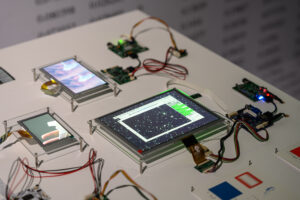
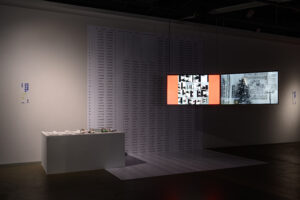
AW:你在2022年末发表的一篇论文《The Eyes Have It — Evolution of the Ontology of Machine Vision》,不敢说我完全读懂了,但在读的过程中经常会有种,“哇真的吗,有这么严重吗?” 的感觉。原因你在文中也点出来了,因为图像已经很广泛地参与,介入以及融合在我们的每一天内,“But all of this is hard to see”。从论文开头时讨论到,人类运用机器之眼是希望更客观的记录真实,到图像的产生以及机器的运用逐渐变得去人类化,不知道我这么理解是对的么?
In your 2022 essay, titled The Eyes Have It — Evolution of the Ontology of Machine Vision, once again, I can’t really say that I understood everything, but while reading, I kept having moments where I thought, “Wow, is that for real? Is it really as bad as it seems?” As you did point out, the reason for this pervasive feeling is the widespread integration of images into our daily lives, so intertwined, so blended, that it’s hard to notice. “But all of this is hard to see,” as you wrote.
In the introduction, you argued that machine vision was initially employed as a supposedly objective means of recording reality, over time, however, it evolved beyond documentation into the generation and production of images and the wider application of automated systems, contributing to the dehumanisation of various human activities. Am I understanding that correctly?
SY:是的。那篇论文严格意义上来讲是我整个博士论文的一个引言部分,不算是非常成功的论文。可能更类似是历史梳理的一篇论文。从当代艺术史中一些比较经典,关于机器之眼的运用,不断不断地进化到现在人工智能的演进,探讨的是机器之眼是如何从一个替代人类眼睛的工具,到它拥有类似人类大脑的功用 — 机器之眼主体论的进化,大概是这么一条脉络上的梳理。
然后你刚才讲,“是真的吗?有这么严重吗?” 我觉得很多媒体理论学者确实有这样一个倾向,把整件事情描述得非常黑暗,包括像Timothy Morton和他著名的《暗黑生态学》,还有像是Matthew Fuller的《邪恶媒介》之类的。我自己可能也很容易被这种理论吸引,随之我研究的内容可能也会往这个方向倾斜。但实际上,现实生活中,我很多时候也在想,“真的有这么夸张吗?”
Sounds about right. That essay was technically speaking, the introductory section of my doctoral dissertation, I don’t think it works particularly well as a standalone paper. It’s more of a historical overview, that traces the evolution of machine vision applications throughout contemporary art history, and their ongoing advancements in artificial intelligence. From being a simple tool that substituted human sight, to almost having cognitive functionality akin to the human brain, basically, it maps the evolution of the ontology of machine vision as a subject in itself.
Regarding what you just said, “Is it really that bad?” I do think many media theorists and scholars have a tendency to portray the situation in a very bleak and dark light. Say, Timothy Morton and his renowned Dark Ecology4, as well as Matthew Fuller’s book: Evil Media5, exemplify the tendency. I, too, am drawn to such theories, and naturally, my research sometimes leans in that direction as well. But in everyday life, I often find myself wondering the same, “Is it truly as extreme as it seems?”
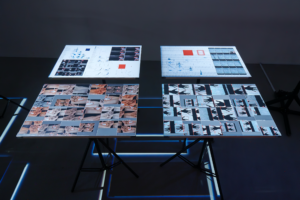
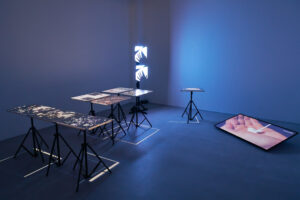
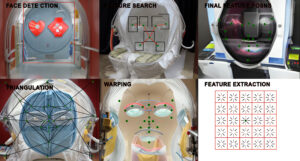
AW:你去年的新作《Taming the Vistas》,该作品向观众提出了一个问题:机器之眼所见到底是真相还是假象?不知道你是否有经历过一些什么,从而萌生了挑战机器正义性的想法?
In the work you created last year, Taming the Vistas (2023), you raised the question of whether machine vision sees truth or illusion. Did you encounter anything specific that led you to this idea of challenging the supposed fairness and objectivity of machines?
SY:对,那个作品提出的问题,就是所谓的机器之眼,到底是人的洞察还只是一场人造的幻觉。作品的创作初衷更多还是源自于我的兴趣,去了解这个系统背后到底是怎么运转的。当我开始做更多的研究,会发现,噢,原来所有的功能都得通过大量的人力劳动去实现,人工去教给。
我是先有兴趣,然后再有实践和操作的过程,接着才有了作品的论述:挑战机器的正义性。起初并没有预设任何要挑战它的立场,而是当实践后才发现它的正义性是应该,或者说是可以被挑战的。
Yes, the idea of that piece focuses on the concept of machine vision: does it truly reflect human insight or merely project an artificial, fabricated illusion? The genesis of this work stemmed largely from my innate curiosity about how these systems are run behind the scenes. As I carried on my research, it became apparent that all functionalities necessitated extensive manual training and human instruction for implementation.
I think everything started because I was simply curious. This was followed by a process of experimentation and practice, which then culminated in the formulation of the artwork’s theoretical framework: to question and to challenge the objectivity of machines. Initially, there was no preconceived intention to challenge whatsoever, it was only through this immersive process, that I realised the supposed objectivity of machines, was something that could, and perhaps should, be questioned.
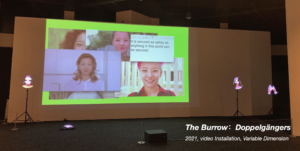
AW:关于你的作品《The Burrow: Doppelgängers》,想以一个直男身份跟你聊聊这个作品的其中一个面向,关于女性期待这件事。
在2019年前我一直生活在西方,跟当下的亚洲相比,西方女性的自主权以及社会地位可能会稍微高一些,这个比较之下产生的差异也是我来日本生活之后才体会到的。这几年下来也是我个人比较感兴趣的话题,感觉这方面的讨论尤其在日本还稍有些欠缺。你分别在日本以及中国都生活过,你觉得两个社会在女性期待这件事上有什么本质的差异么?
About the work you created, The Burrow: Doppelgängers (2021), I’ve always wanted to talk to you about one particular dimension of the work — from the perspective of a straight man — regarding societal expectations placed upon women.
Until 2019, I had been living in the West, compared with the situation in Asia, by and large, I guess it’s safe to presume that, overall, women’s autonomy and social standings might be slightly more favourable. And I’ve only become aware of such disparities after relocating to Japan. Personally, this has become a hugely intriguing topic, and I feel like this is not really being discussed that often, especially in Japan. Given your experiences living in both Japan and China, do you perceive any fundamental differences between the two societies when it comes to expectations for women?
SY:本质上肯定是有的。总体上来看,我觉得在中国的女性,整体情况会比日本好一些。但是我想差异很多时候可能是自己给自己定义的吧。我从自己的视⻆和我的生活当中去看,可能自身没有受到过很多这方面的困扰,所以我对这个差异并不是非常敏感。对我来说,作为一个女性在日本的身份其实是次要的,我在日本更多的身份还是一个外国人。
所以当你说女性期待带给我的困扰吧,我觉得任何期待,都会给任何人带来困扰。我是一名女性,你可能会期待我的作品里有不光是女权意识的元素,或是一些女性叙事的元素,都会给我带来困扰;那么我在日本作为一名外国人,可能策展人或观众会希望我的作品是有那么一些对于中国社会,甚至是政治方面的讨论,同样会给我带来困扰,所以任何属性都会带来困扰。
但这也很能理解,比如说我在看待别人的作品时,我可能也会带有同样的属性预判,以及对于这个属性的期待。困扰的话,可能跟“女性”没有太大的关系,“属性”才是真正带来困扰的。
To a certain extent, yes. Broadly speaking, I do think the situation is somewhat better for women in China than in Japan. I’m guessing these sorts of “differences” are, more or less, internalised, or self-imposed. Drawing from my own life experiences, I’ve probably never been particularly troubled by these issues, which is why I’m not quite sensitive to any perceived disparities between the two places. For me, being a woman in Japan felt secondary to being a foreigner.
When discussing the challenges posed by expectations associated with being a woman, I believe that expectations of any form can be burdensome for any individual. As a female artist, one might expect my work to incorporate feminist themes or narratives, which can be somewhat frustrating. Likewise, as a foreigner living in Japan, there might be expectations from curators or audiences, that my work should address aspects of Chinese society or even politics.
Essentially, any attributed label brings its own set of challenges, which is inevitable, and understandable, because, say, when I look at other people’s work, for example, I might also have preconceived notions and expectations toward it. I think it’s a common human tendency to make assumptions and hold expectations based on the labels. Therefore, in the end, the issue is not specifically the label of a “woman,” but the burden that comes with being categorised at all.
Footnotes
1. Gutai (具体美術協会) was a Japanese avant-garde art movement founded in the 1950s by Yoshihara Jiro (吉原治良). It emphasised experimentation, spontaneity, and the exploration of new artistic techniques and materials. Gutai artists sought to break free from traditional forms and create dynamic, interactive artworks that engaged viewers in innovative ways.
2. Shuji Terayama (寺山修司, 1935–1983) was a Japanese avant-garde poet, playwright, filmmaker, and director known for his surreal and provocative works exploring themes of identity, sexuality, and societal norms.
3. Shigeko Kubota (久保田成子, 1937–2015) was a Japanese artist associated with Fluxus, known for her experimental video art and innovative use of technology to explore themes of femininity, nature, and the human condition. She was a pioneer of video art and intermedia installations.
4. Timothy Morton’s Dark Ecology proposes a reevaluation of humanity’s relationship with nature, emphasising interconnectedness, uncertainty, and the recognition of ecological crises. It challenges traditional environmentalist perspectives by embracing the complexities and darker aspects of ecological systems.
5. Matthew Fuller’s Evil Media explores the darker side of contemporary media technologies, investigating how they can be used for control, manipulation, and surveillance. It examines the ethical implications of media practices and technologies, urging critical engagement with their power dynamics.
Credits
Editor: Axel Wang & Shinka Qinhua Yang
Photography: Courtesy of the artist