
Somewhere in Time
AXEL WANG:
Hito Steyerl(黑特· 史德耶尔)在10年前的一次演讲中,把近几年艺术项目的增长,跟枪支武器的平民化做了一个对比。大概意思是,无论是Duchamp(赛尔·杜尚),Malevich(马列维奇)再到Youtube,都大幅地缩短了人们制作合格艺术品所需要的材料,时间及训练。当然她的演讲有很多面向,就针对刚刚提到的关于“数量”这一点,作为一名多媒体数码艺术家来说,随着越来越多艺术家以及艺术品,到艺术项目的诞生,你会有什么特别的感受吗?
Around a decade ago, Hito Steyerl1 gave a speech comparing the democratisation of firearms to the rapid growth of art projects. Her point was that, from Duchamp to Malevich to YouTube, the time, materials, and training required to create decent or competent artwork have been significantly reduced. Her speech, of course, covered multiple facets but focusing specifically on this idea of “quantity”, as a multimedia digital artist, how do you feel about the increasing number of artists, artworks, and art projects today?
SHINKA YANG:
我个人觉得这是件挺好的事情。现在国内也有特别多的艺术项目,质量参差不齐。但随着数量的增长以及市场的淘汰机制,未来在质量上肯定也会有所提高,整个生态也会跟着进步。那么对于全民的美育工程,或者是整体艺术氛围,甚至普通市民及艺术市场的培养,肯定是件好事情,虽然这个回答听起来有点官方(笑)。
Personally, I believe this is a positive development. Nowadays, many art projects are being carried out across China, though the quality naturally varies. However, as the number of projects increases and the market gradually filters things out, the overall quality of the projects is bound to improve eventually, and the entire ecosystem will progress. The growth will also contribute to art education for the masses, and the broader artistic atmosphere, and the cultivation of both public appreciation and the art market itself. I know this answer sounds a little official or bureaucratic (laughs), but I genuinely think it’s a good thing.
AW:你在上海参与的这类艺术项目,是跟日本这边的类似吗?
Are the projects you’ve been involved with in Shanghai similar to the ones in Japan?
SY:有点类似。但国内基于国情,这类项目主要都还是政府发起,遵循国家领导人的政策(笑)。其中有些会选择和院校合作,有些和企业合作。也会借鉴日本的一些经验,但整体的风貌还是不太一样。
Somewhat similar. However, given China’s unique social and political context, these projects are mainly government-initiated and adhere to the cultural policies of national leaders. (laughs) Some projects collaborate with academic institutions, while others partner with private enterprises. They also draw inspiration from certain Japanese models, but the overall approach and structure remain quite distinct, I would say.
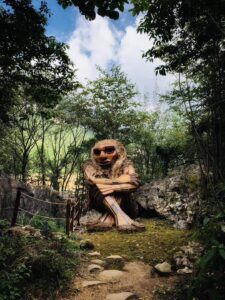
AW:但是观众呢?比方说东京有个双年展或者是什么艺术项目,从名古屋过去是很简单的一件事情嘛。但如果你在上海郊外的农村做一个什么项目,在广州或是北京的人不太可能专程飞过去看吧?所以这些项目都是以吸引当地居民,强调当地性为主?
But what about the audience? Say, when the Tokyo Biennale is on, it’s fairly easy for someone from Nagoya to visit. On the other hand, if there’s an art project in some remote village in a rural area on the outskirts of Shanghai, it’s almost impossible for people to fly over from Guangzhou or Beijing, just to see it, right? So are these projects mainly intended to attract local residents and emphasise locality?
SY:中国和日本确实情况不太一样,中国的艺术爱好者本来也没有那么普遍。这几年许多城市都在办的地域艺术项目往往会和乡村美化、城市更新联系在一起,公共性、服务性会大于艺术性,而公共性必然与在地性有很紧密的联系。 国内也有一些由地产商孵化的文旅项目,和日本的艺术项目会比较相似,一般也都是和既有的旅游资源强绑定的,纯粹去看艺术的人相对还是少。 前几年重庆武隆的一个景区联合四川美术学院搞了一个大地艺术季,请了北川富朗做顾问,无论是从艺术家名单还是组织架构基本都是平移了越后妻有模式。从成果上看不能说做的不好,毕竟连Christian Boltanski(克里斯蒂安•波尔坦斯基)也都请来了,网络上的热度也很高,但是你会发现它真正辐射到的人群大部分还是本来就要去重庆旅游的人,以及行业相关的人。而当地性或许会是更加适合中国的一条路径。
In many aspects, the situations in China and Japan are quite different, especially when it comes to the relative prevalence of art audiences. In recent years, many regional art projects in China have been closely tied to rural revitalisation and urban renewal initiatives. Public function and social service often take precedence over artistic expression itself, and naturally, that kind of public-oriented approach is deeply connected to locality.
There are also some cultural tourism projects incubated by real estate developers that resemble Japanese-style art festivals more closely. These projects, are often anchored to established tourist destinations or attractions, so they tend to draw an overwhelmingly tourism-oriented audience rather than just art enthusiasts.
A notable example would be the large-scale art festival held in Chongqing’s Wulong region a few years ago, organised in collaboration with the Sichuan Fine Arts Institute, with Fram Kitagawa2 serving as an advisor. The festival basically mirrored the artist lineup and organisational blueprint of Japan’s Echigo-Tsumari Art Field model. It was quite impressive actually, bringing on board even internationally acclaimed artists like Christian Boltanski, and there was a huge amount of online attention surrounding the project. But in reality, most of the people it reached were already visiting Chongqing as tourists, along with people working within the art industry itself. So perhaps prioritising locality is, ultimately, a more suitable path for China.
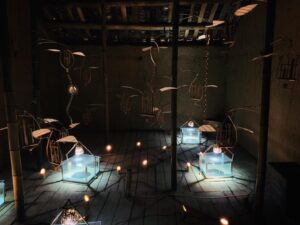
AW:热海2023年年末的艺术祭,有遇到一些什么有趣,或者是难忘的事情吗?或者说跟你之前参与的艺术节相比,有带给你什么不一样的感受嘛?
Did anything particularly memorable or interesting happen during the Atami art festival at the end of 2023? Compared to the festivals you’ve participated in previously, did it leave you with any different impressions or feelings?
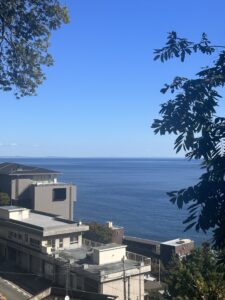
SY:因为我国内工作的原因,我这次没有办法长时间待在热海,去拥有一段比较沉浸式的体验。但是为数不多的滞留时间真的都特别开心。因为热海有山也有海,艺术家们当时是住在山上的,而我展出的画廊在山下。布展走下山时沿途可以看到海,感觉很棒。
Due to work commitments in Shanghai, I wasn’t able to stay in Atami for an extended period of time or fully immerse myself, so to speak. Despite the relatively short time I spent there, I had a great experience. Atami is very mountainous and sits right by the sea. At the time, most of the artists were staying higher up in the mountains, while the gallery exhibiting my work was located closer to the foot of the mountain. Every day, I would walk downhill while looking out at the ocean along the way, and it felt incredible.
AW:整个热海艺术祭跟你之前参加的Alternative Kyoto会有点像嘛?
Would you say the whole thing was a bit similar to Alternative Kyoto, which you also participated in previously?
SY:类型是有点像的,但在热海我参与的是展览,在京都则是一个驻地项目。当时前前后后大概在京都和艺术家们合宿了两个月吧,期间我还在写博士毕业论文。Alternative Kyoto也是我第一次参与驻留项目,而当时驻留的村子太过祥和,我本身又是对科技、技术比较关注的艺术家,会让我有点些不知所措,不知道该如何与当地创造联结。而热海的展览中,我展出了一件已有的作品,因此没有太多的主题制作压力。
The Atami project was more of an exhibition, whereas the Kyoto project was a residency programme. I spent roughly two months living together with the other artists in Kyoto during that time, while also working on my doctoral thesis.
The Alternative Kyoto residency was actually my first experience of its kind, and the village where I stayed was so incredibly peaceful. As you know, I’m one of those artists who primarily focus on technology and digital culture, so I felt somewhat bewildered initially about how to establish a meaningful connection with the local environment. In contrast, for Atami, I was presenting an existing work, so there wasn’t as much pressure to create something specifically tied to the site or theme.
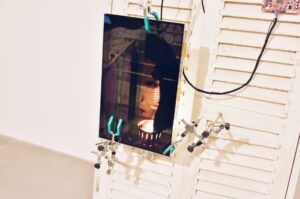
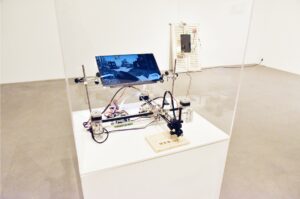
AW:在你不久前参与的一档播客中,你提到了前ChatGPT跟后ChatGPT时代。因为索取知识的维度有了很大的区别,面对学生,你经常有一种“教不动”的感觉。等这群新时代的新人类都开始从业了之后,这也将是我个人必须面对的问题,可以说说你在教学中遇到的一些困难或者挣扎么?
In a podcast you participated in not long ago, you described our current moment as divided into the pre-ChatGPT and post-ChatGPT eras. Because the way people acquire knowledge has changed so dramatically, you mentioned that you often feel as though students have become increasingly difficult to teach. Once this new generation fully enters the workforce, I imagine this is something people like me will also have to confront. Could you talk a little about the frustrations or struggles you’ve encountered while teaching?
SY:我忘记原话是怎么说的,当时说的那个“教不动”的感觉,是现在的学生跟他讲任何的事情他都会用 ChatGPT来回答你。作为老师在教课的时候,你面对的有点像是一台机器。一名老师要带动的知识是很有限的,但是当学生运用非常多不管是ChatGPT或者是别的AI来回馈你的时候,你就是在跟整个人类的知识库做斗争,教学上是有一定的无力感。但是这个无力感确实也是有界限的,因为机器的知识是有边界的,所以教学上或者是交流上,也是可以找到方法突破。
I can’t recall my exact wording back then, but when I talked about feeling “unable to teach,” what I meant was that students nowadays often resort to ChatGPT for almost every query. As a teacher, it sometimes feels like you’re communicating with a machine.
The amount of knowledge a teacher can provide is fundamentally limited, but when students rely extensively on ChatGPT or other AI systems to respond, it starts to feel as though you’re competing against the entirety of humanity’s knowledge database. That inevitably creates a certain sense of helplessness within education. At the same time though, that helplessness also has its limits, because machines themselves still have boundaries. Their knowledge is not infinite. So within teaching and communication, there are still ways to break through those limitations.
AW:如果用歌剧打个比方,当然没有任何对歌剧不尊重的意思,但以前它对人们的意义可能更加重大,现在可能对很多人来说只是一场仪式。这可能也是我个人一直以来的担忧吧,对下一代的人来说,我们现在所做的事情会不会也变得像歌剧一样。
If I were to compare it to opera, without any disrespect to the art form, of course, but opera probably meant more to people back in the day, than it does now. Today, it’s more like a ritual or ceremony to many. To be honest, it concerns me sometimes that the things we are doing right now, might eventually become, a bit obsolete, like opera, to future generations.
SY:我觉得人都有这样一个阶段。像是上大学的时候,我们可能都会有一种,对于相对来说有点不那么时髦,有些陈旧,通俗点可能就是有些土,面对这么一类东西时,会产生一种比较天然的鄙视或者是不满足感。我记得我年轻一些的时候看国内很多很厉害的中国学院派老艺术家,就觉得他们画的都是什么东西;包括现在回过头去看,80,90年代,做媒体艺术的那些人,当时也不清楚他们到底在做些什么。每个人都会经历这么一个阶段吧。
拿我自己做比方的话,当我现在再回头去看那些,我之前可能有一些鄙夷的东西时,我开始觉得随着年纪的增长以及更多知识的学习,逐渐能够看懂它里面的一些根基和脉络。那么这些根基和脉络,它可能不是那么容易让一个年轻人一下子就迅速掌握的。甚至对某一部分人来说,他对掌握这个根基脉络,确实就是没有兴趣。但是对我来说,当我开始渐渐地看明白 — 乍看很简单的线条 — 它背后的脉络或者是社会历史这样的背景时,我才感受到那些比较传统或者是老旧的东西,它的魅力和价值。所以我一直也不太会担心是否所有观众都会接受我。
I think we all go through phases, like during university years, there’s often this perception that certain things in the past are a bit, well, passé — like you naturally dismiss them as unfashionable or outdated, or just “uncool”. I remember when I was younger, I would look at many highly renowned Chinese academic artists, and I felt somewhat perplexed by their work — I just didn’t understand what the heck they were doing. While reflecting on media artists of the 1980s and 1990s, I struggled to comprehend their ideas back then, too. Once again, it just seems to be a phase many of us experience.
Using myself as an example, when I revisit things I once looked down upon, I now realise that as you grow older and accumulate more knowledge, you gradually begin to understand the deeper foundations and historical threads behind them. Those nuances aren’t things a young person can immediately grasp overnight. And for some people, perhaps there’s simply no interest in understanding them at all.
But for me, once I began to slowly recognise the social and historical contexts hidden behind what initially appeared to be simple lines or traditional forms, I started to appreciate their charm and value. That’s probably why I’ve never been overly worried about whether everyone in the audience will fully accept or understand my work.
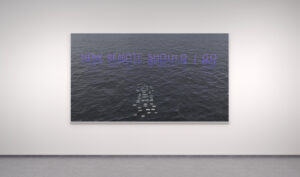
AW:你在上海出生长大,我相信你小时候的生长环境跟现在的上海应该是截然不同。我之前采访一位澳门艺术家,他说小时候在澳门,他清晰记得墙上有一层白白的像石灰一样的粉,跟日本或西方的墙都很不一 样。我自己也很有共鸣,因为现在广州所有的墙似乎都不是这样了。你的作品探讨更多的是受科技影响的当下,尤其你也在海外留学过,离开过家,关于这一方面:乡愁、怀旧、看过去的题材,是你会感兴趣的么?
You were born and raised in Shanghai, and I imagine the environment you grew up in must have been vastly different from the Shanghai we see today. I once interviewed an artist from Macau who vividly remembered a kind of pale, chalky lime powder covering the walls during his childhood, something very different from the walls you’d typically see in Japan or the West. I could personally, and strongly relate to that myself, because in Guangzhou nowadays, it seems the walls no longer bear such characteristics.
Your artwork tends to focus more on the impact of technology in contemporary society, considering your experience studying in Japan and leaving home, in this regard, I wonder if themes like nostalgia, homesickness, or revisiting the past are something that interests you?
SY:这是一个很有趣的话题,因为我对这样的主题很感兴趣,同时也很容易被这种情感打动。我也总是在想与其他人相比,我似乎欠缺了这种(思乡的)感受。但之前跟一个上海籍的策展人聊天,跟我差不多年纪,在日本生活十几年,她开玩笑说我们这代上海人是有原罪的,我们都是没有过去的(笑)。因为我们出生的前后几年,可能是上海市区经历了最翻天覆地的变化的几年,等有稳定的记忆以来其实已经是现在这样:一座净化版的城市。哪怕对市中心那些还未变成大型商圈的破旧小楼还有些记忆,但在形成一定的情感链接之前就已经被抹掉了。所有那些被抹去的东西,可能就是我们上一代人口中所谓的乡愁吧。
上海永远像一个异乡,因为永远会有新的东西涌出来,而这些东西的服务对象并不是原本居住在这里的人(笑)。这可能是很多大城市都存在的状态。对我来说,乡愁可能是台式电脑,拨号上网,诺基亚手机和油墩子(一种以前随处可见的上海路边摊小吃),甚至2018年左右还略显诡异的人工智能神经网络生成的图像,也算得上一种乡愁了。所以你说我的作品探讨更多的是科技影响的当下,我觉得追根到底的话,是因为我只有当下,中国的城市化建设确实在过去几十年有着惊人的速度,也制造出很多没有过去的小孩(笑)。
This is actually a compelling topic for me, because I’m deeply intrigued by these themes and easily moved by such emotions. I often find myself pondering that, compared to others, I inherently lack the sense of nostalgia and homesickness in me.
It’s interesting though — during a recent conversation with a Shanghai-born curator around my age who has lived in Japan for over a decade, she jokingly said that our generation of Shanghainese carries a kind of original sin — we’re people without a past (laughs) The reason is that the years surrounding our childhoods happened to coincide with some of the most tumultuous transformations Shanghai had ever undergone. By the time we formed our memories, the cityscape had already morphed into what we know of today — a sanitised version of its former self.
While we might still retain the faintest memories of some old, run-down residential buildings in the city, before they were converted to bustling commercial hubs, those memories would have been erased before any real emotional connection could be established. Perhaps all those erased pieces are exactly what the previous generation refers to as nostalgia.
Shanghai perpetually feels like a foreign land, because there’s constantly something new emerging, and those developments aren’t necessarily catered to the original inhabitants. (laughs) I guess this is not completely out of the ordinary for many major cities in the world.
For me, nostalgia could manifest in memories of desktop computers, dial-up internet, Nokia phones, and yóu dūnzi (a ubiquitous street snack in old Shanghai). Even the slightly eerie images generated by AI neural networks around 2018 evoke a strange sense of nostalgia.
So, when you mentioned that my work tends to explore the contemporary impact of technology. I believe, at its core, my frame of reference is solely grounded in the present — that’s pretty much all I have. China’s rapid urbanisation over the past few decades has moved at an astonishing speed, creating an entire generation of children without a past. (laughs)
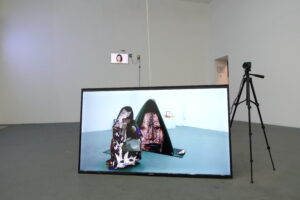
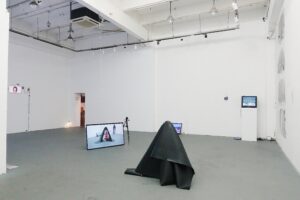
AW:畅想一下人类的未来吧。当下人们谈起全自动机器人或是人工智能的时候,有一方的言论似乎是在描绘一个很黑暗的未来;反之有一方认为人类应该更多地考虑如何跟机器或AI进行更好的合作而不是担心害怕。作为一个数字媒体艺术从业者,你的看法是什么呢?
The mainstream has pushed this narrative of a future with automated robots and AI, and it’s super gloomy, where eventually we are all gonna be killed by machines. On the other hand, some argue that humans should focus more on learning how to collaborate with machines and AI rather than fearing them. As someone working in digital media art, how do you personally see it?
SY:我现在的看法是,作为我这种门类的艺术家,我是非常欢迎、好奇以及对新技术永远都很激动的这么一类人。在激动的同时,也会有一些批判性的思考。我的观点是在未来,机器不会取代人类,但是人会逐渐变成机器人。
另外,我个人一直觉得需要警惕的是,现在的生成式AI正在逐渐拥有制造非常“逼真”经验的能力,当技术足够成熟,这些AI生成的经验总有一天会冲刷掉人类真实生产的经验。所以人还是需要努力保卫生产现实的能力。我也一直在建立我自己的个人数据集(笑)。
From my current standpoint, as an artist of my particular stripe, I’m inherently open-minded, curious, and perpetually excited about new emerging technologies. With that being said, there has to be critical reflection as well.
Looking ahead, my current view is that machines won’t supplant humans, rather, humans themselves will progressively adopt more machine-like qualities.
Another thing I’ve become increasingly aware of is that generative AI is slowly gaining the ability to fabricate extremely convincing “realistic” experiences. Once the technology becomes sufficiently advanced, there’s a possibility that these AI-generated experiences could eventually overwrite or wash away experiences genuinely produced by humans themselves.
That’s why I think people still need to actively safeguard humanity’s ability to produce reality, or the so-called authentic experiences. On a personal front, I’ve also been actively curating my own private dataset. (laughs)
AW:以科学进步的步伐来看,人类战胜死亡,无论是通过何种手段,意识上传也好,器官移植也好,感觉只是时间问题。从你之前的访问来看,与永生相比,你似乎对“消失”和“被删除”比较感兴趣。
It’s probably just a matter of time before humans overcome mortality — mind uploading, organ transplantation, or any other means. Judging from your previous interviews, you seem more interested in the ideas of “disappearing” and “being deleted”, rather than seeking eternity.
SY:我觉得永生已经没什么好谈的了,是上个时代的议题了。就像你说的,永生几乎已经会是一个必然的未来。对于数字时代,消失和被删除反而是比较困难的事情。因为你的数字痕迹永远会被储存在某一个地方。
Immortality already sounds like a topic of the past. As you just mentioned, it’s almost inevitable, and bound to occur at some point. In this digital age, it’s probably more difficult for anyone to just “disappear” or be erased, given that our digital footprint is constantly preserved somewhere indefinitely and easily traceable.
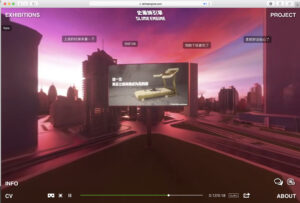
AW:回到访问的最初,接下来2,3年,当你在上海或者国内得到了充足的养分后,你说会想换一个地方生活或者是工作。
Returning to something we mentioned at the very beginning, you said that after spending another two or three years in Shanghai or China, ideally you’d like to move somewhere else to live or to work.
SY:是的。这是一个比较理想的状态。
Yes, that would be ideal.
AW:对现阶段的你来说,如果换一个地方生活,有没有具体考虑过什么地方呢?
At the current phase of your life, have you considered anywhere in particular?
SY:如果真的离开上海可能会考虑东欧国家吧。疫情之前曾经去过一次乌克兰,是至今回想都很想继续久居的地方(希望世界和平)。波兰、塞尔维亚这些我都很想去。特别喜欢破破的地方,感觉很安心(笑)。
If I really were to leave Shanghai, I might consider somewhere in Eastern Europe. I visited Ukraine once before the pandemic, and even now it remains a place where I could genuinely imagine living long-term (hopefully the world can return to peace). Poland and Serbia are also places I’d love to spend time in. I especially like places that feel a little worn-down or imperfect. They somehow make me feel very at ease. (laughs)
AW:最后,可以透露一下接下来有什么想尝试的作品方向,议题啥的么?
Final question Shinka, are there any new directions, themes, or ideas you’d like to explore in your future work?
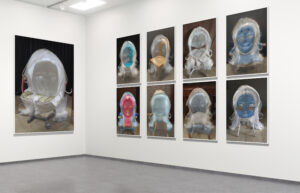
SY:之后我可能会想钻研更多的计算机技术,补充点专业技能。因为我的创作方法有很明显的技术驱动性。 我大部分的灵感都来自于接触到某个新技术时,发现这个技术的逻辑和一些现实议题正好可以作联结。比如我去年在学ControlNet的时候,正好和一个医美机构合作,就延伸出了一个作品,用ControlNet控制图像,照一个女性人脸的结构去生成许多生活场景。图像生成中的“控制”模块,和日常生活中女性的生存场景进行了一个有些恶趣味的结合。
Moving forward, I would very much like to dive deeper into computer technology just to become better at what I do, as my creative process is dominantly technology-driven. Much of my inspiration stems from encountering new technologies and recognising how their internal logic can connect to certain real-world issues.
For instance, last year, while studying ControlNet3, I happened to collaborate with a medical aesthetics institution, which eventually developed into a project where I used ControlNet to manipulate images based on the facial structures of women, generating a series of everyday life scenarios.
The idea of “control” within image generation became intertwined with the lived realities and social conditions surrounding women, creating a somewhat darkly bizarre juxtaposition.
AW:你刚提到艺术家驻村,我突然想起前段时间跟北条知子碰了个面,她的状态好像跟你有点相反。她在毕业后就一直在世界各国驻村,感觉是跑完了一圈,现在想安定下来。但听起来你现在的状态是相对稳定,然后你会想往外到处跑。
A quick anecdote before you go Shinka, you mentioned artist residency just now, and it reminded me of a recent conversation I had with Tomoko Hojo. Her situation actually seemed somewhat opposite to yours. After graduating, she spent years participating in residencies around the world, and now she’s considering settling down. But listening to you now, it feels like your current life is relatively stable, and yet you still have this desire to keep moving “outward” and exploring.
SY:嗯,我觉得也不是单纯想往外跑,我是需要从稳定状态中获得能量的人,也需要从“向外到处跑”的过程中让自己在稳定状态中坚持下去的人(笑)。
Well, I wouldn’t say it’s simply about wanting to escape or constantly move around. I’m the kind of person who needs stability in order to vitalise, but at the same time, I also need moments of “running outward” in order to sustain that stability. (laughs)
Footnotes
1. Hito Steyerl is a German filmmaker, writer, and artist known for her critical examination of digital culture, surveillance, and globalisation through multimedia installations and essays.
2. Fram Kitagawa (北川フラム, b. 1946) is a prominent Japanese art curator and the general director of the Echigo-Tsumari Art Triennale, one of the largest art festivals in Japan. He is known for his contributions to the contemporary art scene in Japan and internationally, particularly for his work in rural revitalisation through art projects. Kitagawa is recognised for his efforts in bringing contemporary art to rural areas and fostering connections between art, nature, and local communities.
3. ControlNet is a communication network used in industrial automation systems to connect and control devices such as sensors, actuators, and controllers within a manufacturing or processing environment.
Credits
Editor: Axel Wang & Shinka Qinhua Yang
Photography: Courtesy of the artist